Summer. School’s out, the calendar is magically clear, and someone in your household has already googled “national parks road trip” approximately forty-seven times. You’re ready. The kids are ready (or at least willing). The question is: which parks?
Here’s the thing about summer and national parks — it’s complicated. Summer is genuinely the best time to visit certain parks, especially the ones that are buried under snow or locked behind icy mountain passes for eight months of the year. But it’s also peak season, which means record crowds, packed parking lots, sold-out campgrounds, and lines that would make a theme park blush. Some parks absolutely shine in summer. Others? You’d be better off saving them for fall.
This guide breaks it all down honestly. You’ll find the best national parks for a summer family trip, what to actually do there with kids, the real crowd situation, and a frank look at which mega-famous parks might be worth skipping — or at least rethinking — when everyone and their grandmother shows up in July.
Let’s get into it.
First: The Summer National Park Reality Check
Before you start booking, here’s what the crowd situation actually looks like these days. National park visits hit a record 331.9 million in 2024, and summer is when the bulk of those visitors show up. Many top parks now require timed-entry vehicle reservations — including Glacier, Rocky Mountain, Arches, and Yosemite — and popular campgrounds book out months in advance.
That’s not meant to scare you off. It’s meant to prepare you, because a family that shows up to Glacier National Park on a Saturday in August without a timed-entry ticket is going to have a very different (and significantly more stressful) day than one that planned ahead. The parks are still worth it — you just have to be strategic.
A few rules that apply everywhere on this list:
Book reservations the moment they open. Some parks release timed-entry passes up to four months in advance; others open at midnight on Recreation.gov and sell out in hours. Set a calendar reminder and treat it like concert tickets.
Arrive before 7 a.m. or after 3 p.m. This is the single biggest crowd-avoidance move you can make. Parking lots fill by mid-morning and the park entrance lines can stretch for an hour or more from 9 a.m. to 2 p.m. Early risers get the golden light, the wildlife, and the empty trails. Late arrivals get the sunset and a much calmer park.
Weekdays are always better than weekends. If your schedule allows even a little flexibility, shifting your big park days to Tuesday through Thursday makes a noticeable difference.
Ask the rangers. Seriously — stop at the visitor center first. Rangers know which trails are currently quiet, what wildlife has been spotted where, and which roads are having construction issues. They’re also great with kids, and most parks have Junior Ranger programs that turn the whole visit into an interactive adventure.
Now, on to the parks.
The Best National Parks to Visit in Summer with Kids
1. Glacier National Park, Montana
Best for: Families who love dramatic scenery and are willing to plan ahead Summer temps: 60s–80s°F in valleys; cooler at elevation Entry fee: $35/vehicle (7-day pass); vehicle reservations also required June 13–September 28 (west entrance, 7 a.m.–3 p.m.)
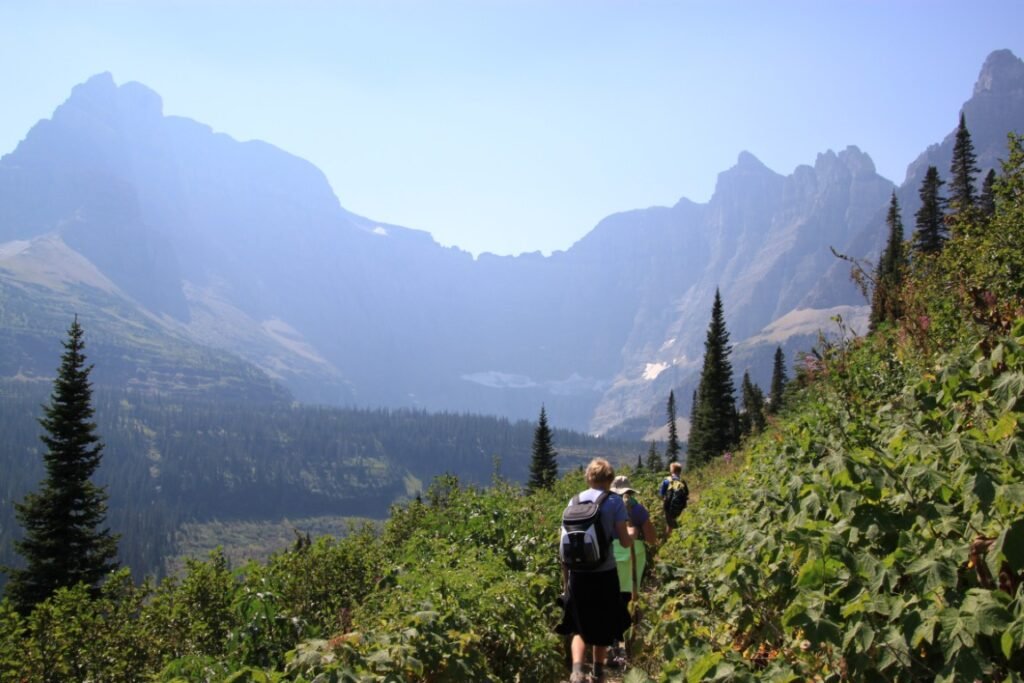
If you only do one national park trip as a family, make it Glacier. This is the kind of place that makes kids go quiet — in a good way. Snow-capped peaks reflecting into impossibly turquoise lakes, grizzly bears ambling across mountain slopes, and the kind of scenery that makes adults put their phones away and just… look.
The centerpiece of any Glacier summer trip is Going-to-the-Sun Road, a 50-mile scenic highway that crosses the Continental Divide at Logan Pass (6,646 feet). The road typically opens fully in late June or early July, and the views along the way — past mountain goats, waterfalls, and glacial lakes — are nothing short of jaw-dropping. Note: the road has vehicle length restrictions (no vehicles over 21 feet from Avalanche Creek to the Sun Point parking area), so check the NPS website before you arrive.
For families with younger kids, Trail of the Cedars is a flat, paved boardwalk loop (under a mile) that winds through an ancient cedar and hemlock forest alongside rushing Avalanche Creek. It’s genuinely magical and double-stroller-doable. From there, you can extend the adventure on the Avalanche Lake Trail — about 4.5 miles round-trip with a modest elevation gain — which ends at a stunning glacial lake ringed by waterfalls. Older kids who are comfortable hikers will love it.
At Many Glacier on the east side, the Swiftcurrent Lake Loop (2.6 miles, flat) is perfect for spotting wildlife — moose, bears, and bighorn sheep are regularly seen here. Note: Many Glacier has significant construction restrictions in 2025, so check current access info before making it your primary plan.
For water-loving families, kayak rentals are available at Lake McDonald, Two Medicine Lake, and Swiftcurrent Lake. Paddling across Lake McDonald with the mountain range reflected in the water is a memory your kids will actually remember when they’re grown.
Family tip: The timed-entry reservation system for the west entrance runs from 7 a.m. to 3 p.m. daily. If you snag a reservation (they’re only $2 and released four months plus 24 hours in advance on Recreation.gov), great. If not, arrive before 7 a.m. — the gates typically aren’t even staffed that early — or after 3 p.m. and plan a sunset drive. Either way, pack bear spray and keep a respectful distance from any wildlife you encounter. Consider also this Nature Walk in Glacier National Park Tour.
2. Grand Teton National Park, Wyoming
Best for: Families who want jaw-dropping scenery without the Yellowstone chaos Summer temps: 70s–80s°F days; cool nights Entry fee: $35/vehicle (7-day pass; also covers Yellowstone)
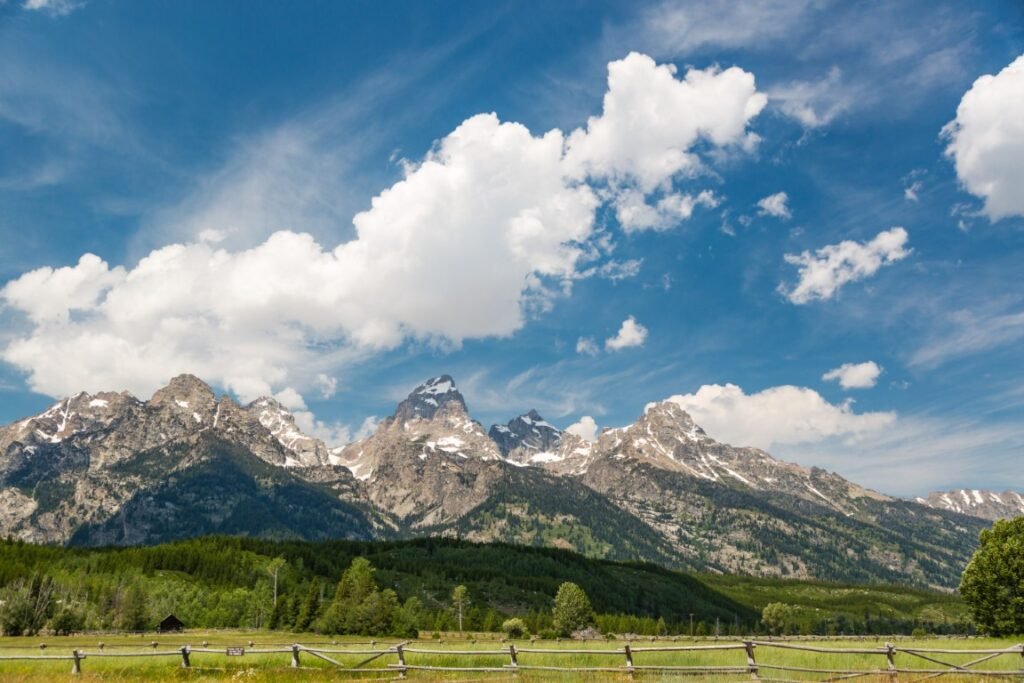
Grand Teton is one of those parks that consistently gets ranked as a favorite by people who’ve visited every park in the country — and for good reason. The Teton Range rises abruptly from flat valley floor to 13,000-foot peaks with essentially no gradual buildup, creating one of the most dramatic mountain landscapes on earth. And because Yellowstone next door gets most of the summer fanfare, Grand Teton remains slightly less insane in terms of crowds (though it’s still busy — don’t confuse “less than Yellowstone” with “empty”).
For families, String Lake is a perfect summer base. The shallow, calm water warms enough to swim in by mid-July, and the surrounding trail system connects to Jenny Lake and Leigh Lake with beautiful views the whole way. Kids can wade, skip rocks, and paddle while parents get to look at mountains. Everybody wins.
The classic family hike is the Hidden Falls and Inspiration Point Trail via Jenny Lake. Take the ferry boat from the east dock across the lake (skip the shuttle — the boat is a highlight in itself) and hike the short 1-mile trail to Hidden Falls. Push further to Inspiration Point for sweeping canyon views. Total hiking distance is only about 2 miles from the boat dock, which is very doable with kids 5 and up.
For something flatter and stroller-friendly, the Schwabacher Landing Road leads to a beaver-dammed stretch of the Snake River where moose sightings are almost embarrassingly reliable. Pull up around sunrise or dusk and you’ll likely see one wading through the willow thickets with the Tetons reflected in the glassy water behind it. It’s one of the most photographed spots in the park — and every single photo looks fake it’s so beautiful.
Wildlife-watching is a genuine family activity here. Oxbow Bend is excellent for spotting bald eagles, great blue herons, moose, and river otters. Antelope Flats Road is where you’ll find bison grazing with the mountains behind them.
For older kids and adventurous families, a raft trip down the Snake River is an incredible way to experience the park from a completely different angle. Multiple outfitters run 3-hour scenic float trips that drift past wildlife-rich cottonwood forest. No prior experience needed — it’s more peaceful float than white-knuckle whitewater.
Family tip: Jackson Hole Airport sits right inside the park boundary, making this one of the more accessible remote parks by air — though flights can be pricey. Flying into Salt Lake City and driving 5 hours is usually a more budget-friendly move. Spend on this Grand Teton National Park – Full-Day Guided Tour from Jackson Hole instead.
3. Rocky Mountain National Park, Colorado
Best for: Alpine adventure with manageable hikes for all ages Summer temps: 65–80°F in valley; much cooler at elevation; afternoon thunderstorms common Entry fee: $35/vehicle; timed-entry vehicle passes required in summer
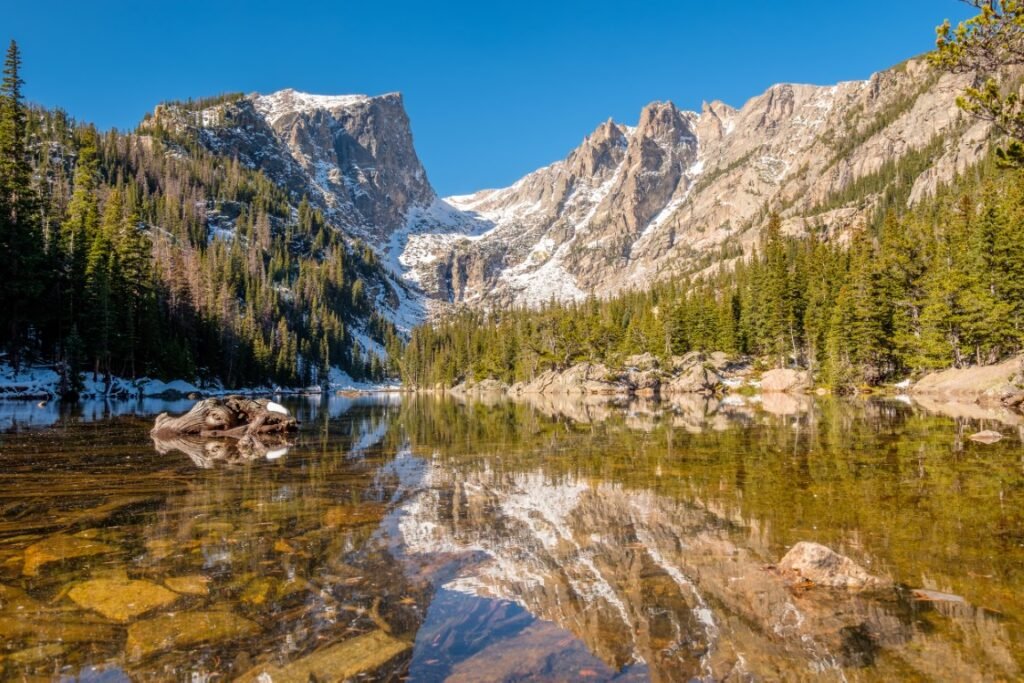
Rocky Mountain is one of the few parks where the main road itself is the attraction. Trail Ridge Road climbs to over 12,000 feet, cutting through sub-alpine meadow and above-treeline tundra where you can spot elk, marmots (the chubby, enthusiastic ones), and pika scurrying around on boulder fields. The sheer fact that you’re driving a minivan above the treeline tends to make kids look up from their screens.
For hiking, the Bear Lake corridor is ground zero for family adventures. The Bear Lake Loop itself is less than a mile and completely flat — great for little legs — while the trail system from that trailhead links to Nymph Lake, Dream Lake, and Emerald Lake in a series of progressively longer (but never extreme) hikes through meadows, past waterfalls, and alongside reflective mountain lakes. Emerald Lake, at 3.5 miles round-trip with about 600 feet of elevation gain, is the full package and very achievable for kids 6 and up.
Wildlife is abundant and easy to spot in summer. Elk are frequently seen in Moraine Park and Horseshoe Park in the early morning and evening — the kind of close-up sightings that make kids forget they’re “bored.”
Family tip: Timed-entry vehicle passes are required to enter both the Beaver Meadows and Fall River entrances during peak summer hours. These sell out fast — check Recreation.gov as soon as your travel dates are set. If you’re staying in Estes Park, some lodging reservations include park access, so check before you book. Also know that afternoon thunderstorms are the Rocky Mountain norm in summer; hike early and be off exposed ridgelines by noon. Join this Rocky Mountain National Park Hiking Tour.
4. Glacier Bay National Park, Alaska (Kenai Fjords as a Pair)
Best for: Families who want an Alaska adventure that’s actually accessible Summer temps: 50s–65°F; bring layers regardless Entry fee: Free (Glacier Bay); $15/person boat tour to access (Kenai Fjords)
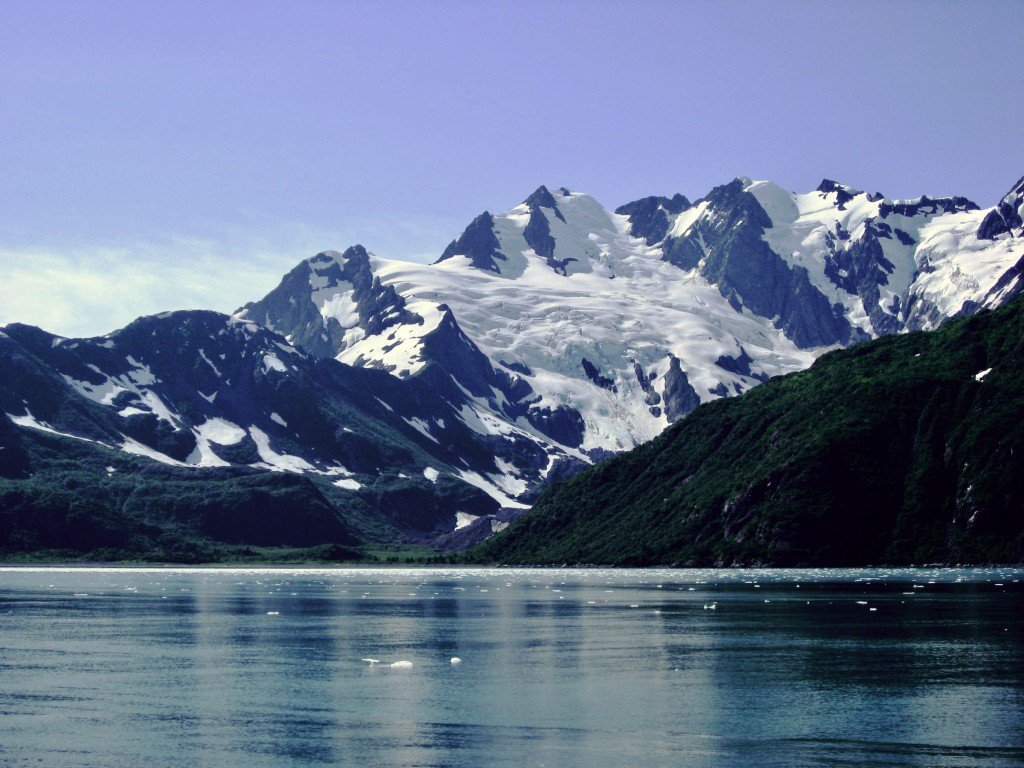
Summer is essentially the only season for Alaska’s national parks, and Kenai Fjords near Seward is the one that works best for families. The park’s crown jewel is the Exit Glacier, accessible via a short, easy 2-mile round-trip hike to the glacier’s base — a walk that younger kids can handle and that delivers a genuine “whoa” moment up close to a wall of ancient ice. Numbered signs along the trail mark where the glacier’s edge stood in previous decades, making it an unexpectedly powerful visual lesson about climate change without anyone having to give a lecture.
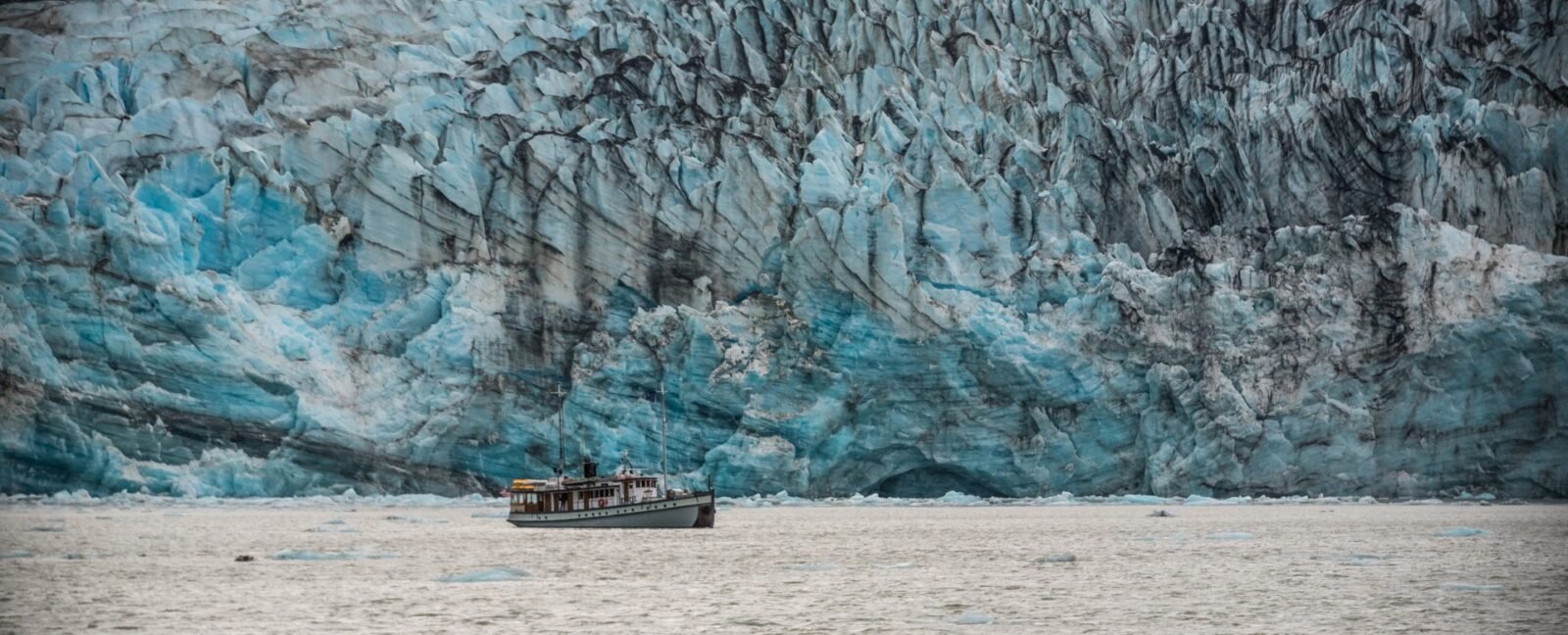
For the park’s real showstopper, though, you want a glacier boat tour departing from Seward Harbor. Half-day and full-day tours cruise through Resurrection Bay and into the heart of the park, where tidewater glaciers calve directly into the sea with sounds like distant thunder. On the water you’ll spot sea otters floating on their backs, Steller sea lions lounging on rocks, puffins skimming the surface, humpback whales breaching, and bald eagles overhead. It’s basically a floating wildlife documentary and kids absolutely lose their minds. Book ahead — these tours fill up weeks in advance during the peak summer window of June through August.
Family tip: Seward is about 2.5 hours south of Anchorage by road or a scenic railway journey (the Alaska Railroad runs summer service). If you’re flying in, Anchorage is your hub. Budget at least two nights in Seward to allow for a full boat tour day plus Exit Glacier. Consider this Kenai Fjords National Park Glacier & Wildlife Cruise.
5. Mount Rainier National Park, Washington
Best for: Wildflower-obsessed families and Pacific Northwest lovers Summer temps: 60s–70s°F in summer; can be rainy; snow lingers at elevation Entry fee: $30/vehicle; vehicle reservations required for Paradise on weekends in summer
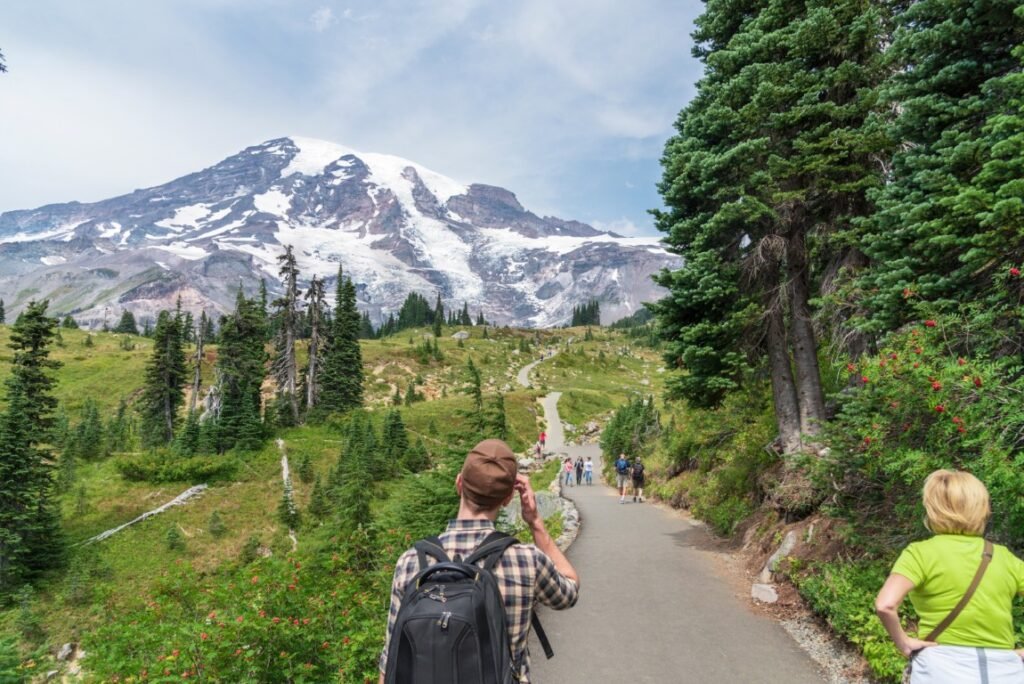
Mount Rainier is a 14,000-foot active volcano draped in glaciers and surrounded by some of the most spectacular wildflower meadows in North America. Peak wildflower season runs from mid-July to mid-August, when the sub-alpine meadows around Paradise erupt in an absurd riot of lupine, paintbrush, and avalanche lilies. If you’ve never seen your kids actually excited about flowers, wait until they’re standing in a meadow at 5,400 feet with a volcano behind them. Different.
The Skyline Loop Trail at Paradise (5 miles, 1,450 feet of elevation gain) is the gold-standard family hike here, offering sweeping views of Rainier, the Tatoosh Range, and wildflower fields as far as you can see. For families with younger kids, the Nisqually Vista Trail (1.2 miles, very gentle) gives you mountain meadow views without significant climbing.
On the east side of the park, the Sunrise area (the highest point reachable by car in the park, at 6,400 feet) has incredible panoramic views and tends to be slightly less crowded than Paradise. The Silver Forest Trail (2 miles, easy) has open views of Rainier the entire way. The Burroughs Mountain hike from Sunrise gets you onto actual volcanic tundra — otherworldly terrain that makes the whole family feel like they’re hiking on another planet.
Family tip: Paradise vehicle reservations are required on summer weekends — book these the moment they become available. The road into Sunrise sometimes doesn’t fully open until July, so check current conditions. Weather on Rainier can shift rapidly even in summer; pack rain gear even if the forecast looks clear.
Make this a special trip with this Best of Mount Rainier National Park from Seattle: All-Inclusive Small-Group Tour.
6. Crater Lake National Park, Oregon
Best for: Families who want something completely unique with manageable driving access Summer temps: Low 70s°F; the rim can be cooler and windy Entry fee: $30/vehicle
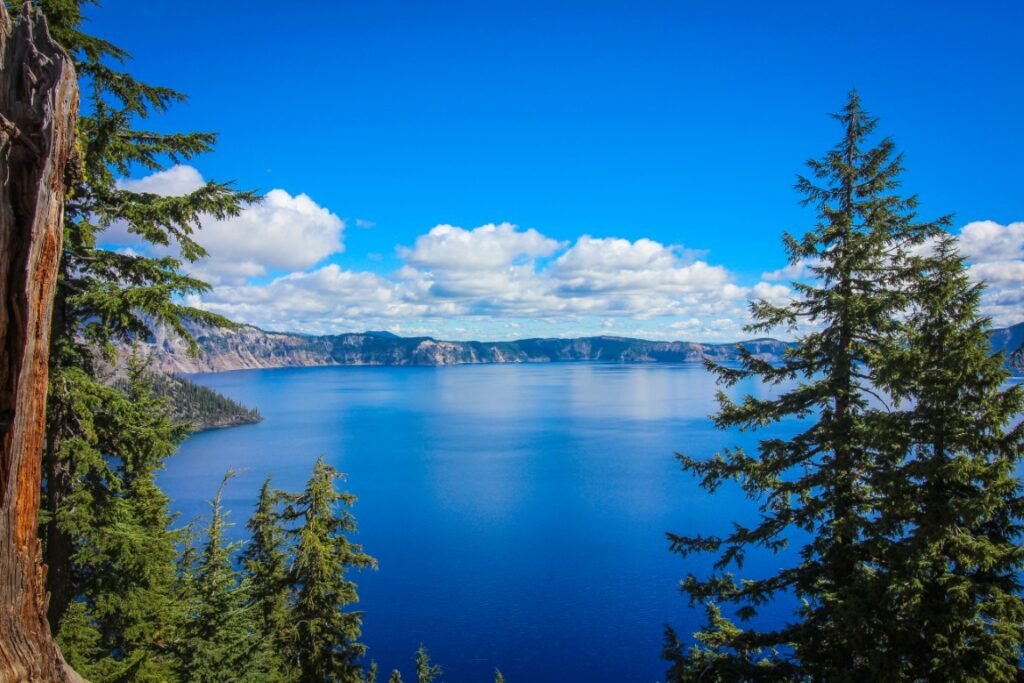
There is no lake quite like Crater Lake. It sits inside a volcanic caldera formed when a massive volcano collapsed about 7,700 years ago, and the resulting lake — fed only by rain and snow with no inlet streams — is the deepest in the United States at nearly 1,900 feet. The water is a shade of blue that looks digitally enhanced in every photograph but is entirely, impossibly real.
The 33-mile Rim Drive circles the caldera with 30 pullouts and viewpoints, and it’s genuinely one of the great American road trip drives. It typically opens fully in July and takes about an hour without stops — but you’ll want to allow at least half a day to properly absorb it. The park also runs ranger-led trolley tours around the rim from the visitor center, which is a great option for families with younger kids who might not make the full driving loop attentively.
For a kid-friendly hike with payoff, the Discovery Point Trail (2 miles round-trip) hugs the rim and delivers continuous lake views. The Plaikni Falls Trail (2 miles, flat) leads through wildflower meadows to a waterfall fed by snowmelt — lovely and very easy.
The boat tour to Wizard Island, the cone-shaped volcanic island rising from the center of the lake, is an absolute highlight. Tours run multiple times daily in summer and the ride itself is an experience — watching the crater walls rise around you from the water. Two of the eight daily tours include a 3-hour stop on the island itself.
Family tip: Crater Lake is often still significantly snow-covered into June, and the rim road doesn’t fully open until July most years. Try this Self Guided Driving Audio Tour in Crater Lake. Plan for late July or August for the full experience. Bring layers — the rim sits at 7,000+ feet and can be genuinely chilly even on warm days.
7. North Cascades National Park, Washington
Best for: Families who want glacial wilderness without the crowds Summer temps: 60s–75°F; July and August are driest Entry fee: Free (no entrance fee!)
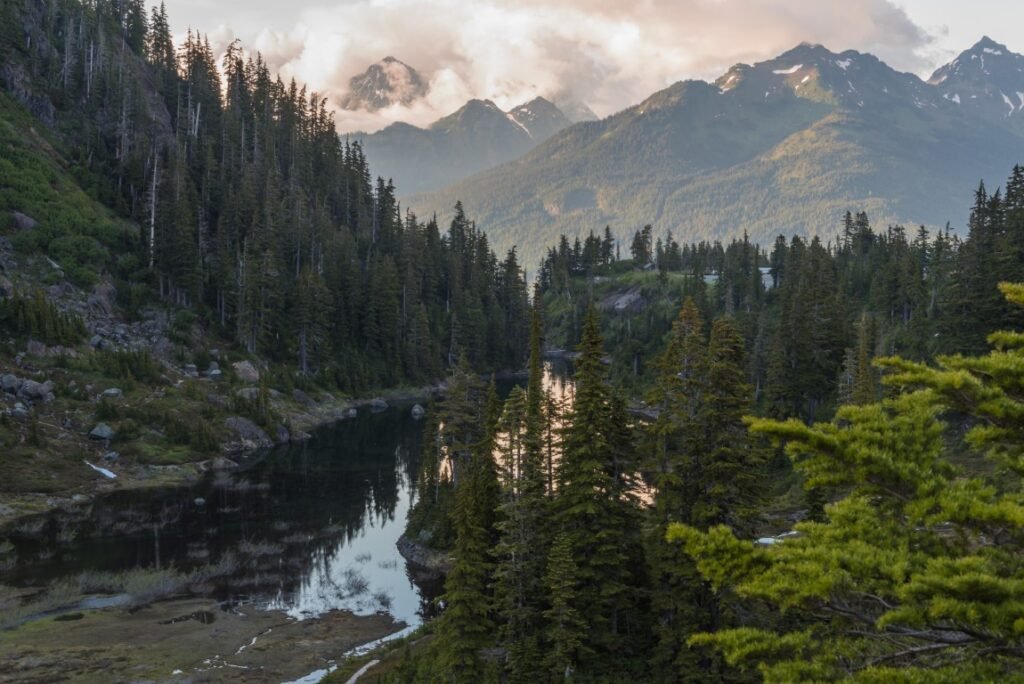
Here’s your secret weapon for a summer park trip. North Cascades — nicknamed “America’s Alps” — receives a fraction of the visitors that flood Glacier or Rocky Mountain, despite being just two hours from Seattle and offering some of the most gorgeous alpine scenery in the country. More than 300 glaciers, turquoise rivers, dense old-growth forest, and a mountain skyline that legitimately looks European.
The North Cascades Scenic Byway (Highway 20) runs through the park east to west and is stunning just as a drive, with multiple pullouts including the unmissable Diablo Lake Overlook — the lake’s otherworldly turquoise color comes from glacial rock flour suspended in the water and has to be seen to be believed. Kids who weren’t interested in “just driving through a park” will crane their necks out the window for this one.
For hiking, the Rainy Lake Trail (2 miles, completely flat) leads to a gorgeous alpine lake and is genuinely one of the easiest rewarding hikes in the park system — stroller-accessible on a good dry day. The Trail of the Cedars (0.5 miles, paved) offers a quick ancient-forest experience near Newhalem.
Older and more adventurous kids will love the Heather-Maple Pass Loop Trail (7.2 miles) — one of the most spectacular hikes in the Pacific Northwest, with 360-degree views over multiple glacial lakes and surrounding peaks. It’s not suitable for young children, but families with teens who hike will remember this one for years.
Family tip: North Cascades has minimal visitor services inside the park — the town of Winthrop on the east side and Newhalem on the west are your best bets for food and supplies. Cell service is basically nonexistent through the corridor, so download offline maps in advance. The lack of infrastructure is exactly why it stays uncrowded — embrace it. Join this 1-Day North Cascades National Park Highlights Tour.
8. Kings Canyon National Park, California
Best for: Families seeking Yosemite vibes without the Yosemite chaos Summer temps: Upper 70s–mid 80s°F in the canyon; cooler at elevation Entry fee: $35/vehicle (combined with Sequoia)
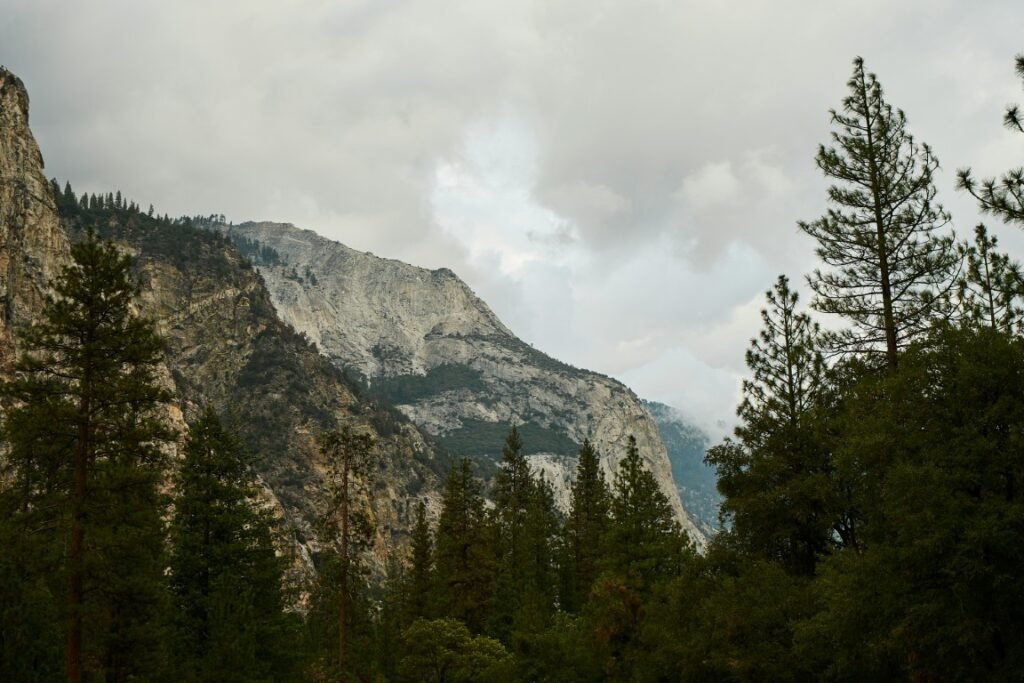
Kings Canyon is what Yosemite would feel like if fewer people had discovered it. Deep granite canyon walls, massive waterfalls, ancient giant sequoia groves, and significantly smaller crowds. It sits adjacent to Sequoia National Park and the combined pass covers both — meaning you can build a full week between the two parks without doubling up fees.
Grant Grove near the park entrance puts your family among some of the largest trees on earth within minutes of parking. General Grant, the second-largest tree in the world, stands in this grove and the short trail around it (under a mile) gives the whole family an instant sense of scale and wonder. Explaining to your kids that this tree was already 1,000 years old when Columbus sailed works surprisingly well as a conversation starter.
The Zumwalt Meadows Loop (1.5 miles, mostly flat) is a gem of a family hike — quiet, lush, with canyon walls towering above on both sides and a good chance of spotting deer in the meadow. Do it late afternoon when the light hits the canyon walls and everyone in your family will be the next person to declare it their favorite hike.
Roaring River Falls (0.3 miles round-trip) is another family win — very short, high payoff, and the crashing waterfall is dramatic enough to impress even kids who’ve been seeing waterfalls all week.
Family tip: There is only one road into Kings Canyon (Highway 180), and it’s winding, steep, and narrow. No vehicles over 22 feet are permitted on the canyon road section. The drive from the Grant Grove area down into Kings Canyon proper is itself spectacular but should be done carefully and slowly.
Want to splurge? Check out this Sequoia & Kings Canyon Two Day Private Tour & Hike.
The Summer Parks You Should Think Twice About (And What to Do Instead)
No honest summer national parks guide is complete without this section. Some parks are genuinely not at their best in summer — or at their most family-friendly — when half the country shows up at once.
Yosemite National Park is one of the most magnificent places on earth. It’s also effectively reservation-only for much of summer, and even with a reservation, parking inside the valley is a nightmare, the trails are packed, and traffic jams are common. If you must go in summer, book your timed-entry pass the moment they open and aim for a midweek visit. Alternatively, consider visiting in late September or early October — the crowds drop dramatically after Labor Day, the light turns golden, and the temperatures remain perfect. Your alternative: Kings Canyon and Sequoia offer similar granite grandeur without the bedlam.
Grand Canyon National Park in summer is brutally hot in the inner canyon — temperatures at the bottom regularly exceed 110°F, making the classic Rim-to-River hike genuinely dangerous for families with children. The South Rim itself at 7,000 feet is pleasant, but the trails down into the canyon should be approached with extreme caution and serious hydration planning in July and August. The best family-friendly move at the Grand Canyon in summer is to stick to the rim, take the shuttle between viewpoints, and save the canyon hike for April, May, or October. Your alternative: Colorado National Monument offers dramatic canyon views with a fraction of the crowds and without the heat danger.
Yellowstone National Park is undeniably spectacular and genuinely worth visiting — but summer turns it into a traffic-congested, parking-lot-hunting, tour-bus-dodging exercise that can test even the most patient family. If you’re going anyway (and honestly it’s still worth it), base yourself in Cody, Wyoming, to the east and enter via the Northeast or East Entrance — routes that are stunning in their own right and significantly less congested than the West Entrance. Alternatively, time your Yellowstone visit for late September, when the wolves are more active, the crowds have thinned, and the park takes on a completely different character.
Packing Smart for a Summer National Park Trip with Kids
A few things that make a real difference in summer specifically:
Sun protection is non-negotiable at elevation. UV intensity increases significantly above 5,000 feet, and most western parks sit well above that. Kids burn faster than you think, especially on open ridgelines and snowfield crossings. Reef-safe sunscreen, sun hats, and UPF shirts are worth packing even if you’re not usually a sunscreen family.
Afternoon thunderstorms are a western summer given. Rocky Mountain, Glacier, Grand Teton, Crater Lake — all of them see regular afternoon thunderstorms in July and August. Plan your hikes for the morning, plan your drives and visitor center time for midday, and be flexible.
Carry more water than you think you need. A good rule: double whatever you think is reasonable. Mountain air is dry, elevation hikes are harder than they look on the map, and kids don’t notice they’re thirsty until they’re already dehydrated.
The America the Beautiful Pass ($80/year) is worth it for any family doing two or more parks in a single year. It covers entrance fees at all National Park Service sites and pays for itself quickly.
Download offline maps before you leave cell range. Most park corridors have spotty to nonexistent cell service, and you don’t want to be navigating by intuition at a trail junction with a six-year-old who needs a bathroom.
Summer in America’s national parks is still one of the great family travel experiences — messy logistics and all. Yes, it takes more planning than it used to. Yes, you might have to set an alarm to get into the parking lot at Glacier before the masses. But watching your kid stand at the edge of a glacial lake or scramble up a granite boulder with mountains behind them, completely absorbed in something wild and real — that’s still worth every bit of it.
Book early, arrive early, and go find something that surprises you.
Want to know more? Check out our guide to the best national parks for families.