Let’s talk about the best-kept secret in family travel: national parks in winter.
While everyone else is fighting summer crowds, scrambling for timed entry permits, and hiking at 5 a.m. just to beat the heat, a smaller and quietly smarter group of families has figured out that some of the most iconic parks in America are dramatically better — better weather, better wildlife viewing, better photos, and infinitely better parking — in the colder months. Parks that charge $35 to get into in July and require you to reserve a spot six months in advance will basically roll out the red carpet for you in January.
The key, as with everything in national park travel, is knowing which parks to choose. Because while visiting Death Valley in December is genuinely brilliant, visiting, say, Voyageurs National Park in February is an adventure best reserved for families who own expedition-grade cold weather gear and think “extreme” is a setting on their thermostat. This guide covers both ends of that spectrum — and everything in between — so you can match the right winter park to the right family.
Here’s what you need to know about the best national parks to visit in winter with kids.
Two Types of Winter Parks
Before diving in, it’s worth understanding that “winter national parks” actually means two very different things:
Warm-weather winter parks are destinations in Florida, Texas, the desert Southwest, and California where winter is the best season — the unbearable summer heat drops to pleasant hiking temperatures, the bugs thin out, and the crowds follow the calendar rather than the actual weather conditions.
Snow-and-cold winter parks are places like Yellowstone, Zion, and Bryce Canyon where the winter experience is completely different from summer — magical, uncrowded, sometimes otherworldly — but requires real preparation and some adjustment to expectations around what’s accessible.
Both categories can be extraordinary for families. The trick is knowing which you’re signing up for.
Warm-Weather Winter Parks (Where Winter IS the Best Season)
1. Everglades National Park (Florida)
Best for: Wildlife-obsessed kids; families who want to feel tropical in January; Florida road trips Winter temps: 60s–80s°F days, 50s at night Entry fee: $35/vehicle
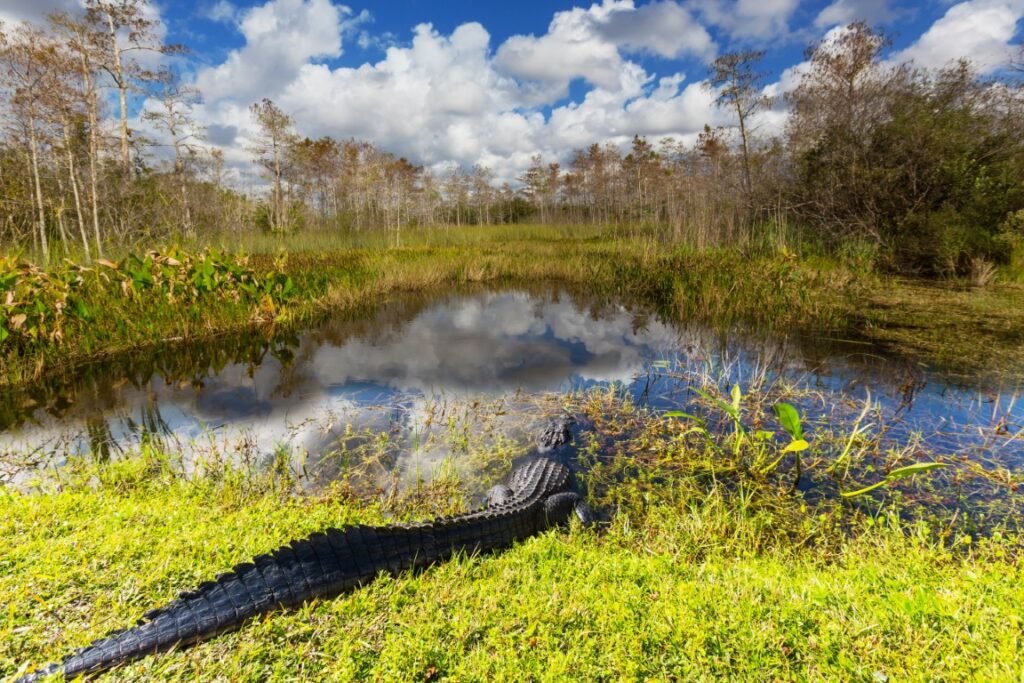
Here’s the honest truth about the Everglades: if you visit in summer, you’re going to be hot, bitten by every known variety of Florida insect simultaneously, and walking through shin-deep water while sweating through clothing you’ll probably have to throw away. If you visit in winter — November through April, the dry season — the mosquitoes retreat, the temperatures drop to genuinely pleasant levels, the water recedes and concentrates all the wildlife into visible spots, and the birdwatching becomes some of the best in North America.
For families with kids, winter is not just the better time to visit the Everglades. It’s basically the only time to visit comfortably.
The Anhinga Trail (0.8 miles, fully paved loop) at the Royal Palm area is the park’s signature family walk — a boardwalk through a sawgrass marsh where you’ll walk within feet of anhinga birds drying their wings, turtles basking on logs, and alligators doing what alligators do best, which is lying completely still while looking both prehistoric and terrifying. During the dry season, alligators concentrate near the trail’s water features. This is a park where the wildlife viewing from a flat, easy trail genuinely rivals anything you’ll find at a more famous park.
Shark Valley offers a 15-mile paved loop that’s perfect for family bike rides (bikes available for rent on site) and ends at an observation tower with sweeping Everglades panoramas. The two-hour ranger-led tram tour here is beloved by families — a naturalist narrates the whole route and stops wherever wildlife appears. Book tram tour tickets in advance (December through April, reservations are essential; the parking lot can fill and create wait times of two-plus hours by mid-morning).
For something the kids will talk about for years, an airboat tour outside the park boundaries is the Everglades experience they’ll replay in their heads at age 30. Coopertown is one of the NPS-adjacent operators; the open boats glide through sawgrass at speed, with a guide who spots alligators and explains the ecosystem. Not inside the national park proper, but an essential Florida experience.
Kid-friendly activities beyond hiking: The park’s Junior Ranger program includes age-specific booklets and a wildlife bingo sheet for kids spotting pelicans, raccoons, and birds on the trails. Ranger-led programs peak during the dry season — guided paddles, bird walks, and “slough slogs” (wading into the wetlands with a ranger) are available seasonally. Check the park schedule at nps.gov/ever before you arrive.
Family tip: The Everglades has three separate entrances that are hours apart and don’t connect — plan your route before you go, not in the parking lot. The Homestead/Ernest F. Coe entrance is closest to Miami and gives you access to the Anhinga Trail, most of the park’s short hiking trails, and the Road to Flamingo. On your way out, stop at Robert Is Here fruit stand — a legendary South Florida institution about 15 minutes from the park entrance — for fruit shakes made from produce you’ve never heard of. The line is always long. It is always worth it.
2. Death Valley National Park (California)
Best for: Families who want to hike a record-breaking landscape without the heat stroke; geology lovers; all ages Winter temps: 60s–70s°F days (sometimes warmer), 30s–40s at night Entry fee: $35/vehicle
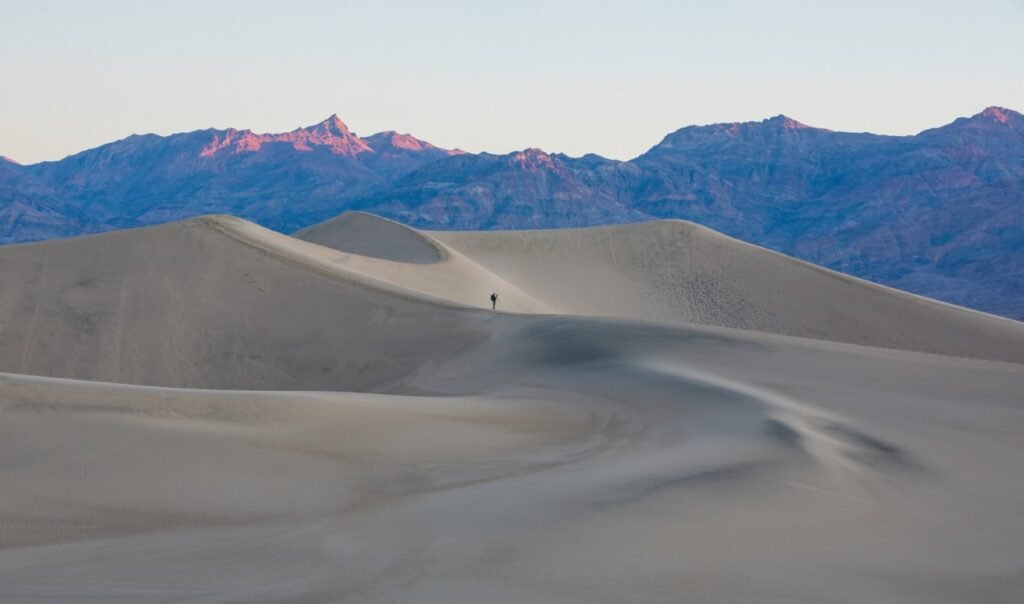
Death Valley in January is one of the most pleasant surprises in the entire national park system. In summer, the lowest and hottest place in North America is genuinely dangerous — surface temperatures can exceed 200°F, and the park sees significant visitor emergencies every season. In winter, those same trails, sand dunes, and salt flats are perfectly hikeable in light layers, the light is extraordinary, and the park’s bizarre and beautiful landscape can be explored with full days of activity.
The hiking options that are simply impossible in summer are fully accessible in winter. Badwater Basin (the lowest point in the Western Hemisphere at 282 feet below sea level) is a relatively easy walk across a vast salt flat — the scale of it is genuinely hard to process, and kids love crouching down to look at the intricate salt crystal formations up close. Zabriskie Point, one of the most photographed viewpoints in the park, requires a short walk from the parking lot and rewards with panoramic views of badlands that look like the surface of Mars. Mesquite Flat Sand Dunes, the iconic dune field near Stovepipe Wells, has no formal trail — you just walk out into the dunes as far as your energy allows, which makes it perfect for kids who need to run off steam in a way that’s impossible to mess up.
For a deeper hike, Golden Canyon (4 miles round trip, moderate) takes families through a narrow canyon with dramatically colored walls in shades of red, gold, and purple. In cool winter temperatures, it’s a genuinely beautiful and manageable half-day hike for school-age kids. Darwin Falls (2 miles round trip, easy) is a short walk to a 30-foot waterfall fed by a natural spring — one of the few water features in the park and a reliable surprise for kids who expect nothing but sand.
Family tip: Even in winter, Death Valley requires real preparation. Bring more water than you think you need — the dry desert air dehydrates faster than you expect, and there are limited services in this enormous park. Fill your tank before entering; Furnace Creek has the only gas station inside the park, and it’s expensive. Temperatures can drop sharply at night, so pack real layers even if the daytime forecast looks warm. Check road conditions for any dirt roads before driving them — some require high-clearance vehicles.
3. Zion National Park (Utah)
Best for: Families who want one of the most beautiful parks in the country without sharing it with 10,000 other people Winter temps: 40s–55°F days, below freezing at night and at elevation Entry fee: $35/vehicle
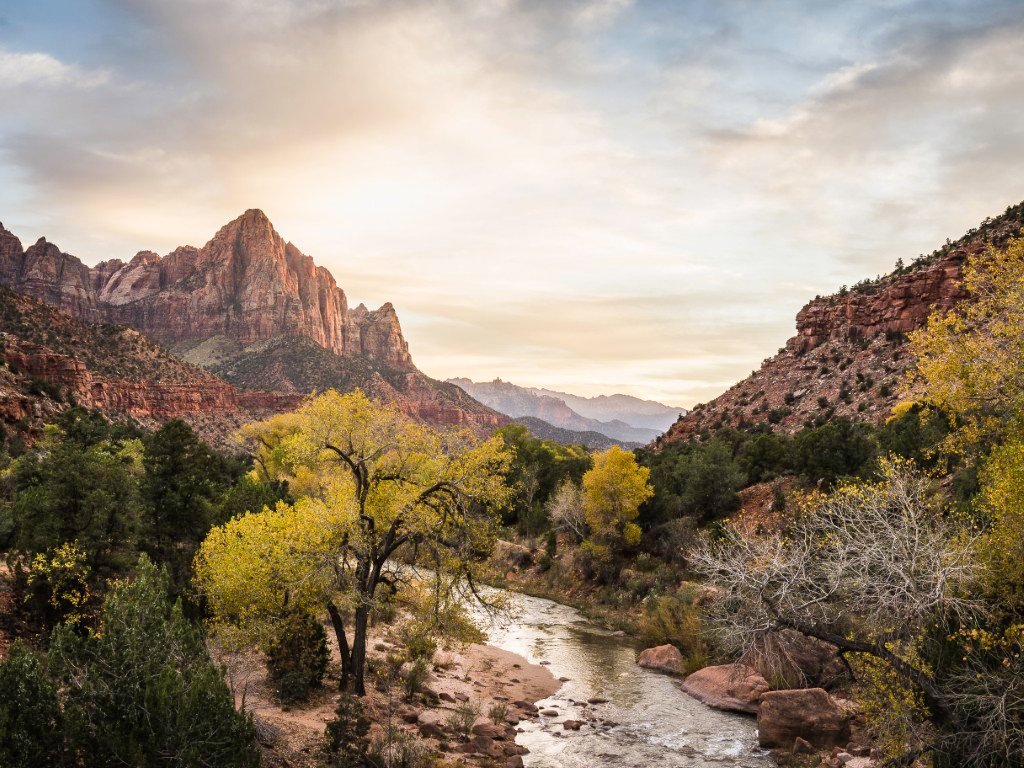
Zion is the most-visited national park in Utah and one of the most-visited in the entire country. In summer, you’ll wait for shuttles, compete for parking, and share famous trails with hundreds of people. In January and February — the park’s quietest months — those same red sandstone canyons, hanging waterfalls, and dramatic canyon walls are nearly yours alone. That’s not an exaggeration.
The winter bonus that most families don’t know about: in December, January, and part of February, the park’s mandatory shuttle system stops running, which means you can drive your own car directly through Zion Canyon Scenic Drive. Park at any trailhead you want, stay as long as you like, and leave whenever it suits you. With kids, this changes everything.
The Pa’rus Trail (3.5 miles round trip, fully paved and flat) runs along the Virgin River and is stroller-accessible year-round — a lovely, gentle walk with canyon views the entire way. The Riverside Walk (2.2 miles round trip, paved but not flat) follows the river to the mouth of the Narrows and is doable for most families in winter; just be aware that sections can be icy, so traction devices (Yaktrax or similar) are smart to have. The Canyon Overlook Trail (1 mile round trip, moderate) delivers panoramic canyon views for relatively modest effort and is generally open in winter unless conditions are dangerous.
For families with older kids who want the full Zion winter experience, The Narrows is possible with proper gear. Outfit everyone at Zion Outfitter or a similar Springdale shop with dry bibs, canyoneering boots, neoprene socks, and a walking stick — expect to pay around $45 per person. The water is cold even with gear, but the experience of walking through a slot canyon where 1,000-foot walls close in overhead is one of the most extraordinary things you can do in any national park at any time of year. Best for kids eight and older with some hiking experience.
Family tip: About a third of Springdale businesses operate on reduced winter hours or close entirely — check your restaurant and accommodation options before you arrive rather than assuming everything will be open. Zion Lodge, inside the park, is open year-round and offers special winter rates. Traction devices (Yaktrax or microspikes) are worth the small investment for adults and older kids; icy patches on shaded trails can turn an easy walk sketchy without them. Always check nps.gov/zion for trail closures before heading out — conditions change.
4. Big Bend National Park (Texas)
Best for: Remote adventure-seekers; star-gazing families; kids who like the idea of visiting Mexico; families who want solitude Winter temps: 50s–70s°F days, 20s–40s at night Entry fee: $35/vehicle
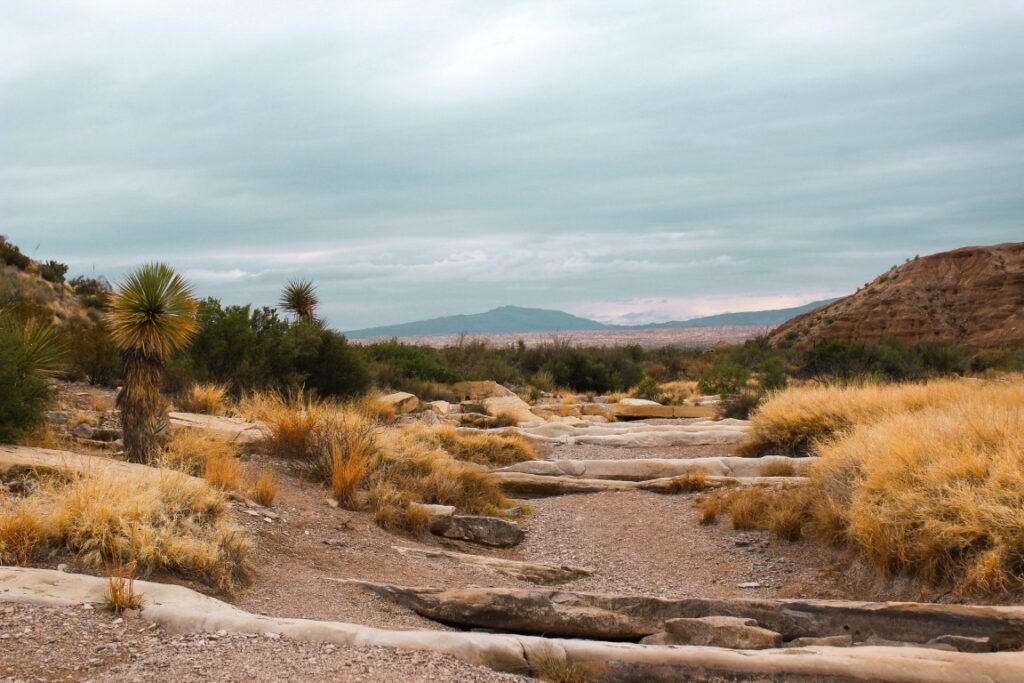
Big Bend is one of the most remote national parks in the contiguous United States, and that remoteness means that even during its peak season — which is winter — you’ll still find stretches of trail with nobody else on them. The Chisos Mountains receive their most comfortable temperatures in winter; the Chihuahuan Desert trails that are off-limits in summer heat are fully enjoyable from October through April.
For families, the Window View Trail (0.3 miles, easy) is a two-minute walk to a natural window framing a view of the desert below — perfect for young legs or as a quick stop between driving. The Santa Elena Canyon Trail (1.7 miles round trip, easy) is the park’s most iconic family hike: a flat walk ending at the mouth of a canyon where towering 1,500-foot limestone walls close in on both sides and the Rio Grande flows between them. It’s genuinely dramatic. Kids old enough to understand what they’re looking at will be struck by it.
Boquillas Hot Spring, a short walk from a parking area near the Rio Grande, is a natural hot spring pool in a riverside alcove — one of those low-key family moments that outperforms its description significantly. And speaking of the river: Big Bend is one of the few national parks where you can legally and officially cross into another country. The Boquillas crossing via rowboat takes families into the small Mexican village of Boquillas del Carmen for lunch, which is an experience kids don’t forget.
Family tip: Big Bend’s remoteness is real. Cell service is essentially non-existent throughout the park. Fill your tank in Marathon, Alpine, or Study Butte before entering — don’t rely on finding gas inside. Stock groceries and any supplies you’ll need, as dining options within the park are limited. Download offline maps before you lose signal. Winter nights at Big Bend can drop well below freezing, especially at elevation in the Chisos Basin, so pack warmer layers than the daytime forecast suggests you need.
5. Arches & Canyonlands National Parks (Utah)
Best for: Families doing a Utah national parks road trip; red rock lovers; kids who want to see iconic desert landscapes Winter temps: 30s–50s°F days, below freezing at night Entry fee: $35/vehicle each (or use the America the Beautiful pass)
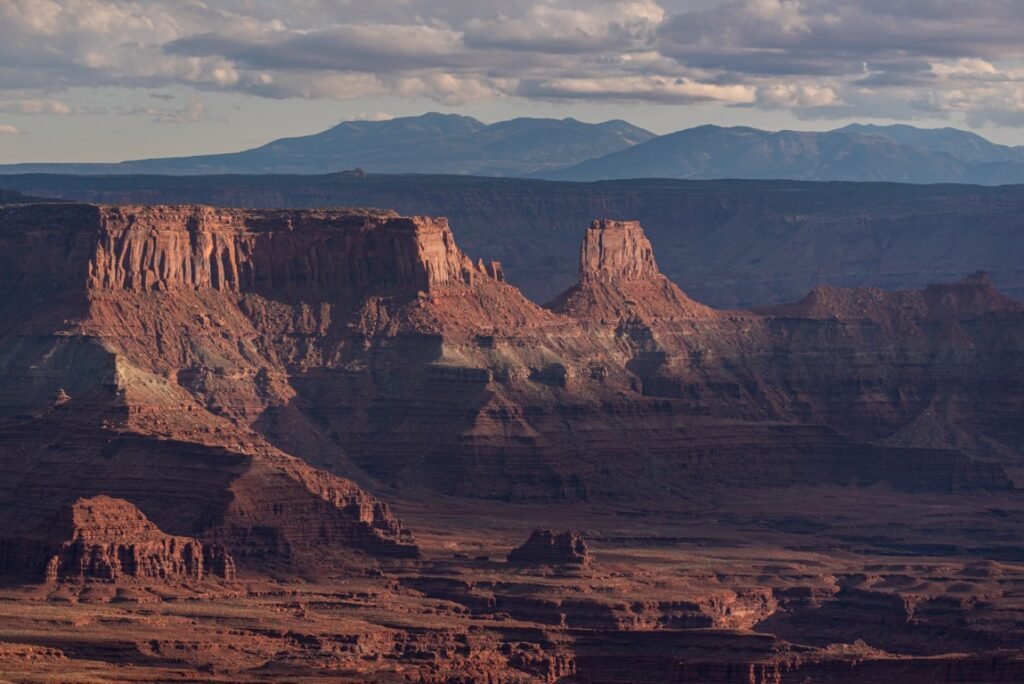
These two parks share a base in Moab, Utah, making them a natural combination for a winter road trip. Arches is small and can feel overwhelmed by visitors in peak season; in winter, you have a legitimate shot at hiking to Delicate Arch — Utah’s most iconic landmark — without shoulder-to-shoulder crowds at the viewpoint.
The winter hiking is essentially everything you’d do in summer, just in the right temperatures and with dramatically fewer people. Delicate Arch Trail (3 miles round trip, 480 feet elevation gain) is the bucket-list hike that earns its reputation at any time of year, but in winter light the arch glows in ways that summer never quite manages. The trail can be icy in spots — traction devices recommended for the upper slickrock section. Windows Loop (1 mile, easy) is the ideal family starter: a short, mostly flat walk through a cluster of enormous arches that kids can scramble under and through. Landscape Arch (1.6 miles round trip, easy) is technically the longest natural arch in the world, and the flat trail to it is accessible for most ages.
If it snows during your visit — not guaranteed, but it happens — red rock dusted in white is one of the most photographed landscapes in the Southwest for good reason.
Family tip: No road closures in Arches or Canyonlands in winter, but the Arches visitor center can operate on limited hours. The campground at Arches is first-come, first-served in winter — which is actually great news, since competing for summer reservations requires setting an alarm at exactly the six-month booking window. Moab itself has plenty of family lodging, restaurants, and gear shops year-round.
Cold-Weather Winter Parks (Where the Magic is the Snow)
6. Yellowstone National Park (Wyoming)
Best for: Families who want a genuinely different, genuinely magical national park experience; wildlife lovers; kids who can handle cold Winter temps: Often well below 0°F; dress for serious cold Entry fee: $35/vehicle (though most access is via guided tours in winter)
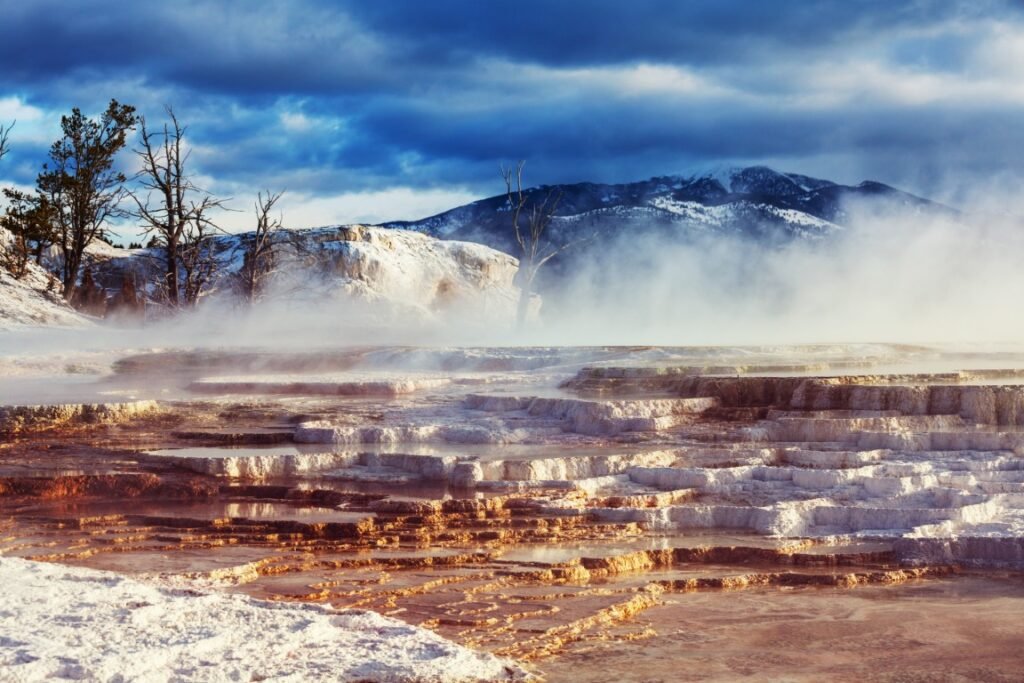
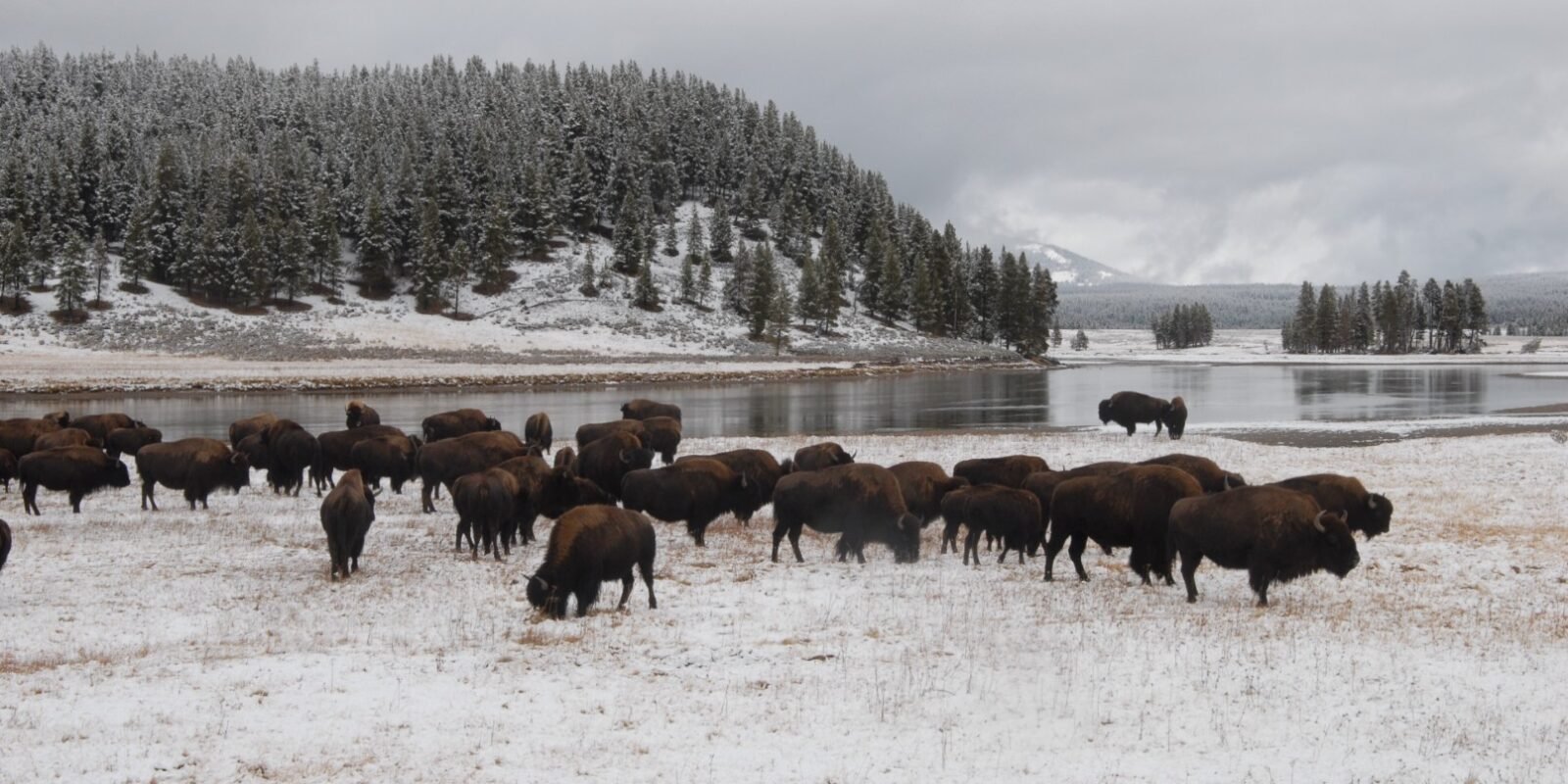
Yellowstone in winter is one of the most extraordinary landscapes on Earth. Thermal features — geysers, hot springs, boiling mud pots — steam dramatically against backgrounds of deep snow. The usual summer crowds of four million visitors drop to a fraction. Snow-covered bison stand outside Old Faithful. The park belongs to the animals.
The catch for families: most of Yellowstone’s roads are closed to private vehicles in winter. The only year-round road goes from Mammoth Hot Springs to the northeast entrance. To access the rest of the park — including the iconic geyser basins and the interior — you need a snowcoach (large heated vehicles that serve as buses) or a guided snowmobile tour. Both are available through park concessionaires and both genuinely thrill kids, though dress as warmly as you have ever dressed in your life because snowmobile tours are legitimately, memorably cold.
Old Faithful Snow Lodge is the best base for winter families — it sits steps from Old Faithful and the Upper Geyser Basin, is open all winter, and offers cozy fireside evenings after a day in the cold. Watching Old Faithful erupt against a backdrop of snow and steam with no one else around is one of those rare experiences that lives up to any expectation.
Family tip: Snowcoach tours book up well in advance, especially around the holidays and long weekends. Reserve through Xanterra, the park’s main winter concessionaire, early. Check the NPS website (nps.gov/yell) for current winter access and facility status before you go. And truly: you cannot overdress for Yellowstone in winter. Bring hand warmers, foot warmers, and base layers even for kids who “never get cold.” They will get cold.
7. Bryce Canyon National Park (Utah)
Best for: Families who want to see hoodoos covered in snow; snowshoeing; the most unexpected winter visual in any national park Winter temps: 20s–40s°F days, single digits at night Entry fee: $35/vehicle
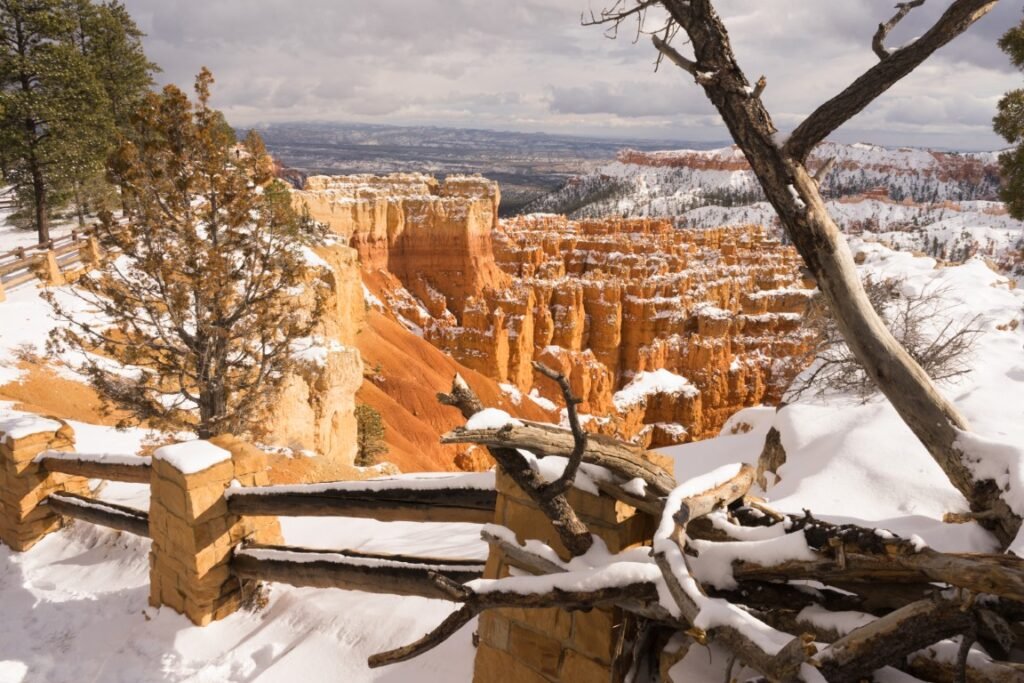
Bryce Canyon makes the most compelling argument for winter national park travel of any park in the country. The park’s famous hoodoos — the bizarre, otherworldly spires of orange and red limestone that fill the canyon below the rim — are absolutely extraordinary when dusted with snow. The contrast between vivid orange rock and brilliant white snow is the kind of thing that makes photographers cry. And because Bryce’s elevation (over 8,000 feet) guarantees snow coverage for much of winter, you have a real shot at experiencing it.
Better yet: the park lends snowshoes free of charge from the visitor center on weekends. Guided ranger snowshoe walks are offered on winter weekends and are an exceptional family experience — rangers lead small groups through snowy terrain while explaining how the canyon was formed and how the hoodoos get their colors. Even families who have never snowshoed in their lives manage it fine on Bryce’s groomed winter trails.
Rim overlooks — Bryce, Inspiration, Sunrise, and Sunset Points — are all plowed immediately after storms and accessible year-round. Even if the canyon trails are icy or snowpacked, simply driving the rim and stopping at overlooks gives families views that are among the best in the national park system.
Family tip: Higher trails and some canyon-floor routes require traction devices or snowshoes in winter. Check trail conditions at the visitor center before heading down into the canyon, and note that the Wall Street section of the Navajo Loop trail and the Peekaboo Loop Connector are typically closed in winter. Dress for significantly colder conditions than the forecast suggests — Bryce’s elevation amplifies wind chill. The visitor center, open year-round, is your best resource for real-time conditions.
8. Great Smoky Mountains National Park (Tennessee/North Carolina)
Best for: East Coast families; winter hikers who want scenery without the Midwest cold; waterfall lovers Winter temps: 20s–50s°F at elevation, milder in the valleys; snow possible any time Entry fee: FREE (the only major national park with no entrance fee)
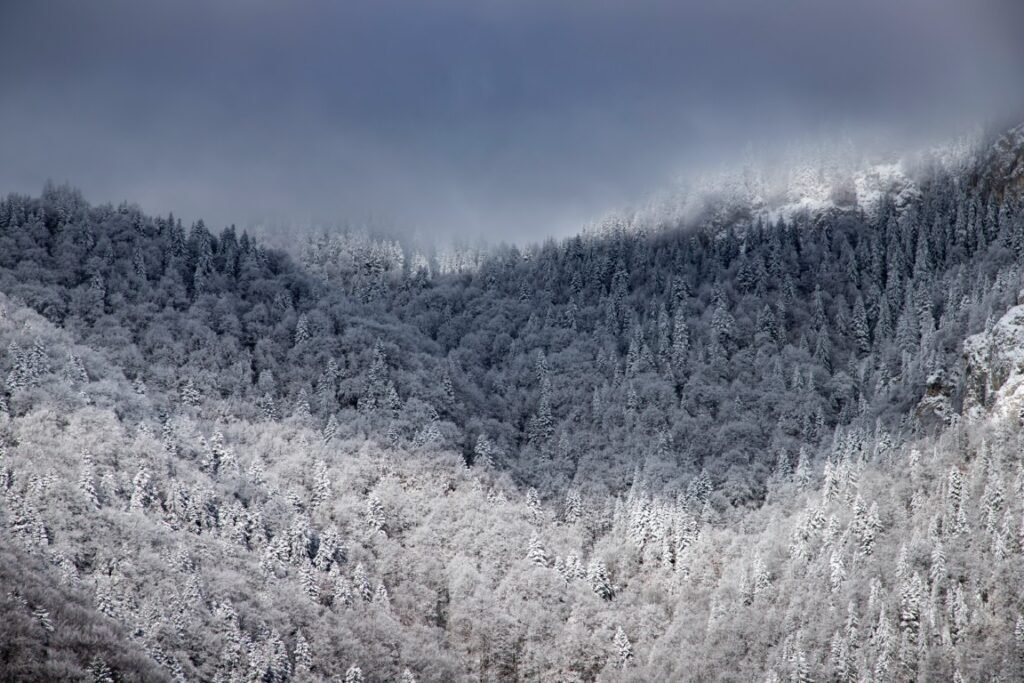
The Great Smoky Mountains is the most-visited national park in the country — and the vast majority of those visitors come in fall. Winter visits drop significantly, which means this enormous, beautiful, genuinely spectacular park is available to your family with dramatically less competition for parking, viewpoints, and trails.
Without leaves on the trees, the views open up across ridges and valleys that summer covers completely. Waterfalls throughout the park run year-round and take on an icy, dramatic quality in winter. Laurel Falls (2.6 miles round trip, paved, one of the most popular waterfall trails in the park) is accessible most of the year and gorgeous in winter conditions.
Clingmans Dome Road closes in winter (typically December through March), but the main roads through the park remain open weather permitting. The smaller visitor centers are open every day except Christmas. Temperatures at elevation can drop dramatically — Clingmans Dome summit at 6,643 feet is substantially colder than the valleys even on the same day.
Family tip: Check road conditions on nps.gov/grsm before heading out — winter storms cause temporary closures, and the park’s roads at elevation can become impassable quickly. The Smokies’ proximity to tourist-heavy Gatlinburg and Pigeon Forge means plenty of family lodging options nearby, and those towns don’t slow down in winter. For genuine park solitude, get up early and drive in before the day-trippers from those towns arrive.
Planning Your Winter National Park Trip: Practical Tips for Families
Match the park to your family’s cold tolerance. If your kids are miserable below 40°F, the Florida and desert parks are your friends. If your family actively enjoys cold weather and snow, Yellowstone and Bryce will reward you more than almost any summer park visit.
Verify what’s open before you go. Winter is when closures happen. Visitor centers, campgrounds, specific roads, shuttle systems, lodges — all of these can operate on reduced schedules or close entirely in winter. The official NPS website for each park has current conditions and operating hours. Do not rely on information from previous years.
The America the Beautiful pass is always worth it in winter too. At $80/year, it covers entry to every park on this list except the Everglades (free), Great Smoky Mountains (free), and any that charge separately for tours (Yellowstone snowcoach tours, cave tours, etc.). If you’re visiting more than two or three parks, the math works immediately.
Dress in layers, always — even in the warm parks. Desert mornings in January can be frigid. Florida evenings can be surprisingly cool. Pack base layers and a fleece or puffy for every person regardless of the daytime forecast.
Traction devices are worth the investment for icy park trails. Yaktrax, microspikes, or similar slip-on cleats make a meaningful difference on icy trails in Zion, Bryce, Arches, or any park where temperatures fluctuate above and below freezing. They’re inexpensive, packable, and can turn a sketchy trail into a manageable one.
Winter means shorter daylight hours — plan accordingly. By mid-afternoon at high-elevation parks in January, the light is already going. Build your day around starting hikes in the morning and leaving hard or unfamiliar terrain for morning hours when you have a full day’s light ahead of you.
Book early for Yellowstone winter tours. Snowcoach and guided snowmobile tours from official concessioners book up weeks or months in advance, especially during holiday periods and long weekends. Don’t assume availability when you arrive.
Cell service is unreliable in all of these parks. Download the NPS app and offline park maps before you leave signal range. A printed paper map from the visitor center is never a bad backup.
Here’s the simplest case for winter national park travel with families: the parks don’t disappear when the calendar flips to November. The geysers still steam at Yellowstone. The Everglades alligators still sun on the boardwalks of the Anhinga Trail. The hoodoos at Bryce still glow orange under dusted snow in a way that makes everything you’ve ever thought about Utah seem like an understatement.
What does disappear in winter are the crowds, the heat, the permit competitions, the overflowing parking lots, and the subtle pressure of sharing an iconic landscape with a thousand other families trying to get the same photo.
Your kids will still be wide-eyed. The views are still there. The Junior Ranger badges are still being handed out by rangers who suddenly have time to talk. And you might have Delicate Arch mostly to yourself at golden hour on a cool January afternoon.
That’s what winter national park travel actually is. And it’s entirely worth it.
Planning your family’s national park adventures? Check out our guide to the best national parks for families.