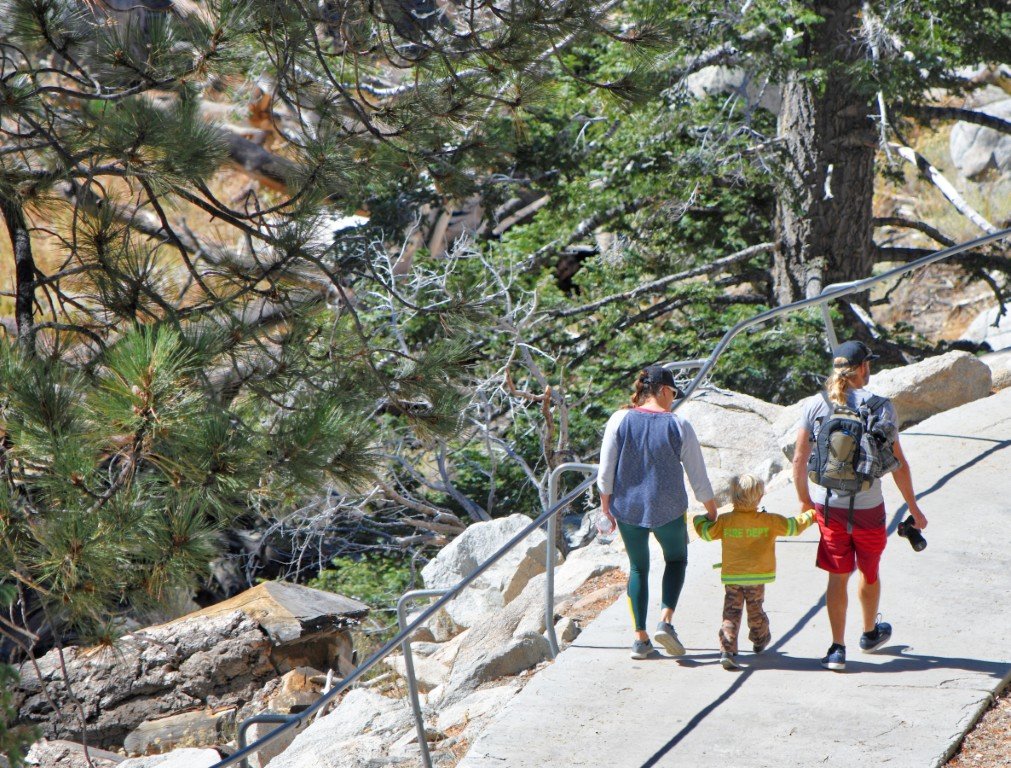
Here’s a truth that no travel brochure will ever tell you: planning a national park trip with a toddler is a completely different sport than planning one without a toddler. The usual metrics — best viewpoints, most challenging trails, longest scenic drives — suddenly matter a whole lot less. What actually matters is whether there’s a paved path your all-terrain stroller can handle, whether the “wow moment” is within half a mile of the parking lot, and whether there’s a shaded spot nearby to eat Goldfish crackers and decompress when little legs stage a sit-down protest somewhere around mile 0.4.
The good news? The right national park can make all of this work beautifully. With a bit of strategic planning and the right destination, toddler-age national park trips are not only survivable — they’re genuinely magical. We’re talking about the look on a two-year-old’s face the first time a geyser erupts, or the way a three-year-old stops mid-tantrum when a deer walks ten feet from the trail. Nature has a way of doing that.
This guide covers the best national parks for toddlers in the US — with specific stroller-friendly trails, easy walks, sensory-rich activities, and honest advice to help you plan a trip your little one (and you) will actually enjoy.
What Makes a National Park Toddler-Friendly?
Before diving into the picks, it’s worth defining what “toddler-friendly” actually means in a national park context, because it’s more specific than just “easy trails.”
Short distances to the payoff. Toddlers have a low tolerance for buildup. The best parks for this age group deliver something genuinely exciting — a waterfall, a geyser, an enormous tree, a sandy dune — within the first half-mile. If the main event is a strenuous 3-mile round trip, you’re going to have a problem.
Stroller and carrier accessibility. Some trails are paved and flat enough for a regular stroller. Others require an all-terrain jogging stroller or a hiking backpack carrier. The best toddler parks have at least some genuinely stroller-accessible paths, so you’re not physically carrying a 28-pound human the entire time they refuse to walk.
Sensory engagement. Toddlers are driven by touch, sound, and sight. Parks with things to look at, splash in, climb on, or simply stare at in wonder are going to hold their attention far longer than a “scenic viewpoint” that looks like a postcard to you and like absolutely nothing to a two-year-old.
Bail-out friendliness. This one is underrated. The best parks for toddlers are ones where you can easily cut the day short, return to the car, head back to your accommodation for naptime, and come back later. Parks that require long one-way drives or complicated shuttle systems with no easy exit are significantly more stressful with small children.
Gateway town convenience. A nearby town with grocery stores, restaurants, and accommodation means you’re not trapped in the park when things inevitably fall apart mid-afternoon.
With all of that in mind, here are the parks that consistently earn top marks from parents of toddlers.
1. Great Smoky Mountains National Park (Tennessee/North Carolina)
Stroller-friendly: Yes, on several paved trails Entry fee: FREE Best season: Spring (April–May) or Fall (October)
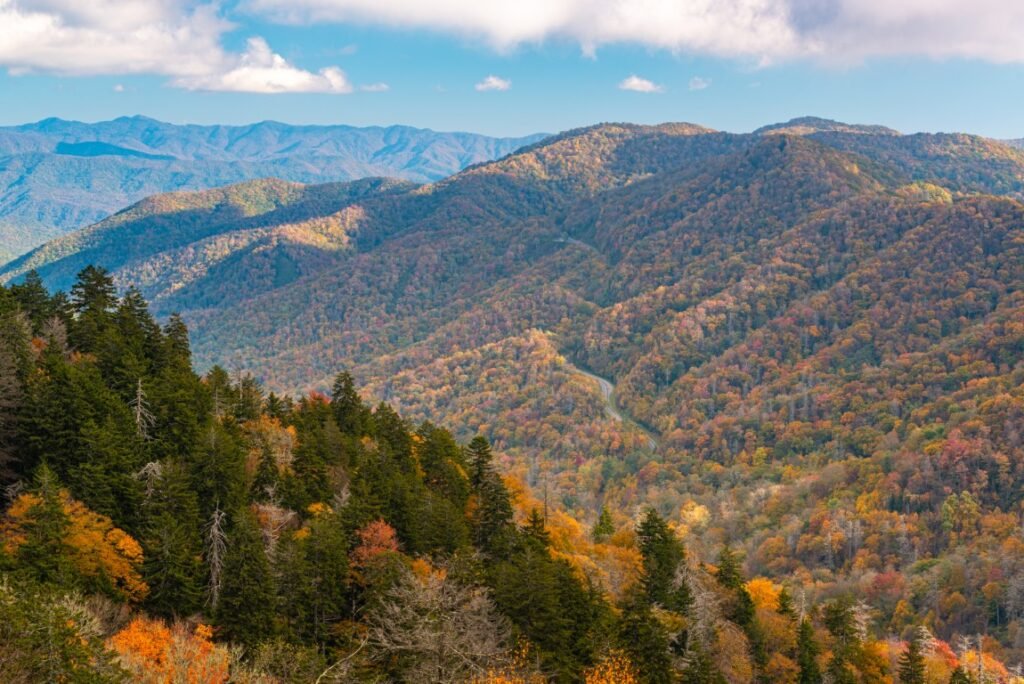
Great Smoky Mountains is the most visited national park in the country, and a huge part of that is because it genuinely works for every age — including the very youngest visitors. There’s no admission fee (the only major national park without one), which already makes it feel like a win before you’ve even arrived.
For toddlers, the Laurel Falls Trail is paved the entire way and leads to one of the most beautiful waterfalls in the Appalachians — 1.3 miles each way, so you can turn around whenever you need to. The Kephart Prong Trail (0.8 miles) is another gentle, shaded walk along a stream that toddlers absolutely love. Running water, rocks to poke at, and the sound of a babbling creek are pretty much everything a two-year-old wants from an afternoon outdoors.
Cades Cove is worth its own mention for toddler families. It’s an 11-mile valley loop you can drive slowly, stopping whenever wildlife appears — and white-tailed deer and black bears appear frequently. The toddler-in-car-seat situation suddenly becomes an asset here: you can let your little one nap during the drive while you watch for animals from the rolled-down window. Genuinely one of those unexpected national park wins.
The Sugarlands Visitor Center has interactive exhibits sized for young kids that make a rainy-day or midday rest stop genuinely worthwhile.
Toddler tip: Time your arrival for morning when the park is cooler and before midday nap window closes. Bring a compact stroller with decent wheels — the paved trails are accessible but occasionally rough at the edges.
2. Yellowstone National Park (Wyoming/Montana/Idaho)
Stroller-friendly: Yes — extensive boardwalk system Best season: June–August
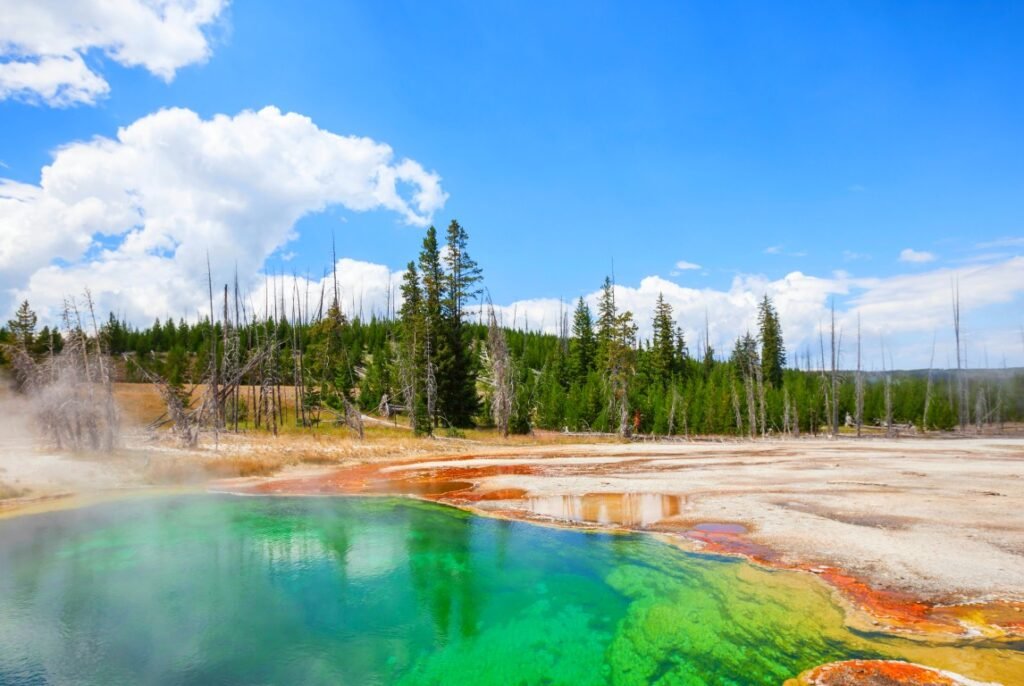
Yellowstone might seem like an ambitious choice for a toddler trip, but here’s the secret that experienced families know: most of Yellowstone’s greatest hits are accessible directly from the parking lot via flat, paved boardwalks. You genuinely don’t need to hike a single real trail to have an extraordinary day here.
The Old Faithful area is the obvious centerpiece. The geyser erupts roughly every 90 minutes, shooting boiling water up to 185 feet into the air, and you can check the predicted time at the visitor center so you’re in position when it goes. For toddlers, this is as close to magic as geology gets. Wide, flat walkways make stroller access easy throughout the geyser basin. The Upper Geyser Basin Boardwalk winds past dozens of other geothermal features — bubbling mud pots, steaming vents, rainbow-colored hot springs — all from a safe, elevated boardwalk that keeps little hands away from dangerously hot surfaces.
Important safety note for toddlers at Yellowstone: The hydrothermal areas are genuinely hazardous — the water in many pools exceeds 200°F. Boardwalks are non-negotiable, and little ones need to stay within arm’s reach at all times. Some parents opt for a toddler leash or harness in busy geyser areas, and yes, it’s absolutely the smart call.
Wildlife viewing is spectacular and almost entirely done from the car or from roadside pullouts — making it perfect for the toddler set. Lamar Valley on the park’s northeastern end is where you’re most likely to spot bison herds, and the sight of a massive bison ambling past your vehicle window tends to produce expressions from toddlers that you’ll be talking about for years.
Toddler tip: Yellowstone is best approached as a drive-and-stop park for toddler families. Plan your day around the Old Faithful eruption time, take in the boardwalk features, do your wildlife viewing from the car, and build in a proper midday break for napping and eating before heading back out.
3. Arches National Park (Utah)
Stroller-friendly: Partially — some paved paths, most trails are packed dirt or slickrock Best season: March–May, September–October
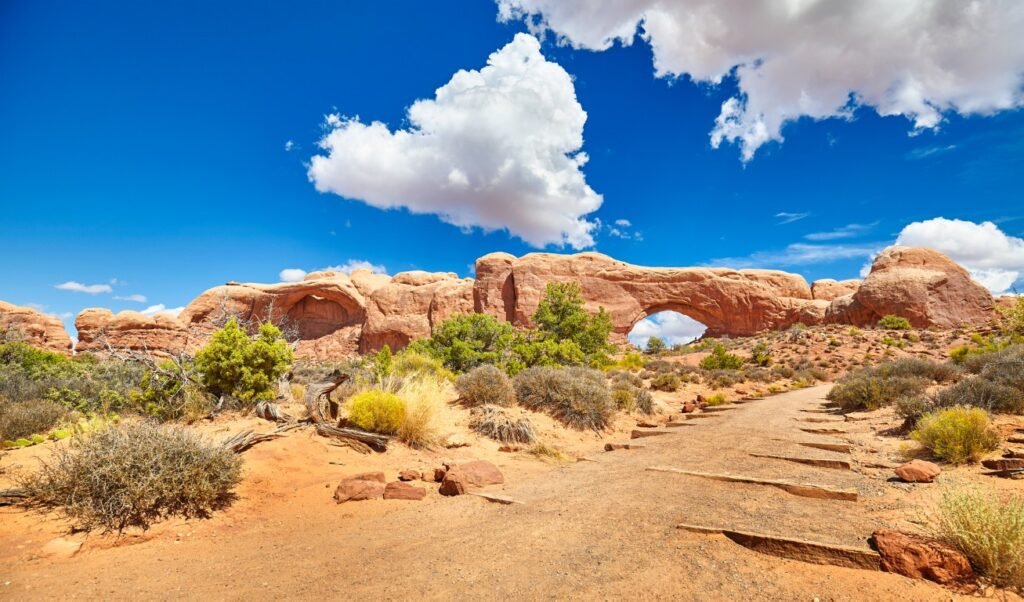
Arches consistently tops family travel lists, and for good reason: the park’s most iconic features are genuinely accessible to toddlers, and the compact size means you’re not spending half the day driving between attractions.
The Windows Section is ground zero for toddler families. Park in the Windows lot and you’re immediately surrounded by massive natural arches — some of the largest in the world — accessible via short, easy walks. The Double Arch Trail is a flat 0.5-mile round trip across packed dirt that ends at two enormous arches you can stand under. Toddlers find the scale of it genuinely awe-inspiring, and the area around the base is safe for little ones to explore while you take approximately four hundred photos.
Balanced Rock, right off the main scenic drive, requires almost no walking at all — a short 0.3-mile loop on packed gravel gets you right up to one of the park’s most distinctive formations. This is your toddler’s first “whoa, is that real?” national park moment.
For strollers, the main scenic drive itself is paved and dotted with pullouts, so you can drive the park’s highlights with minimal walking required on the worst toddler days. Stay on marked paths — Arches has significant areas of cryptobiotic soil crust (a dark, lumpy biological layer critical to the desert ecosystem) that takes decades to recover if disturbed.
Toddler tip: Summer temperatures regularly exceed 100°F. Visit in spring or fall, always, and hit the trails before 9am. The park is close to Moab, which has excellent restaurants, grocery stores, and accommodation — making day trip logistics with a toddler much more manageable.
4. White Sands National Park (New Mexico)
Stroller-friendly: Yes — flat sand is surprisingly easy to navigate Best season: October–April

If you’re looking for the single most inherently toddler-compatible national park in the country, White Sands might be it. There are no dangerous cliffs, no trail navigation required, no timing issues with wildlife or geysers. There is just an enormous expanse of blindingly white gypsum sand dunes where toddlers can run, roll, dig, and sled to their hearts’ content.
The Interdune Boardwalk is a flat 0.4-mile accessible loop that’s perfect for strollers and very young walkers, and provides interpretive signs about the unique ecosystem. But honestly, most toddler families skip the structured trails entirely and just find a dune, park themselves, and play. Bring a plastic sled (available for rent at the visitor center for around $20, with partial refund on return) and your toddler will go down dunes until your arms give out from hauling them back up.
One thing worth noting: gypsum sand doesn’t hold heat the way regular beach sand does, which means it stays relatively cool even on warm days. Toddlers can go barefoot without risk of burnt feet — an unusual and genuinely appreciated feature for a desert park.
The sunset at White Sands is spectacular, and the park often runs free ranger-led sunset walks that are slow-paced and narrated in a way that even very young children can engage with.
Toddler tip: Pack diaper wipes in industrial quantities. White gypsum sand gets absolutely everywhere — in ears, in diapers, in the car, in your own shoes for the next three weeks. It’s part of the charm. Also pack extra clothes for your toddler, because they will be white from head to toe before you’ve been there twenty minutes.
5. Zion National Park (Utah)
Stroller-friendly: Yes — several paved, flat trails Best season: October–May (avoid summer heat)
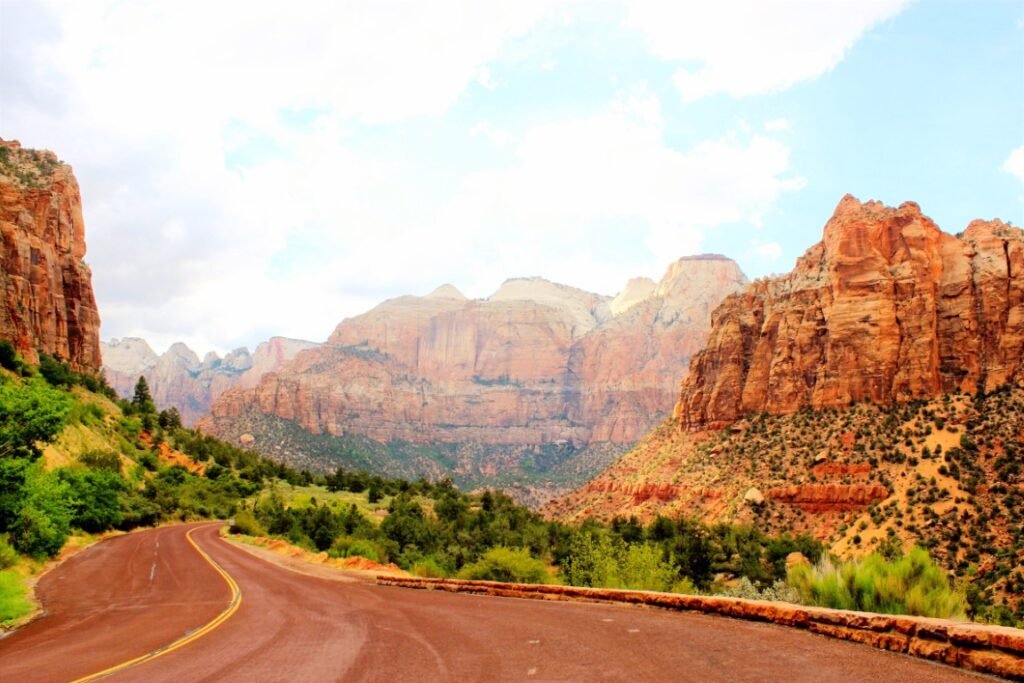
Zion is one of the most stunning landscapes in North America, and it’s more accessible to toddler families than its dramatic canyon walls might suggest. The key is knowing which trails to target and using the park’s free shuttle system strategically.
The Pa’rus Trail is the gold standard for toddlers at Zion — a 3.5-mile paved, completely flat path along the Virgin River that strollers can handle with ease. You don’t have to walk the whole thing; turn around whenever your toddler’s enthusiasm (or patience) runs out. Deer are frequently spotted along this trail, the river sounds are deeply soothing, and the canyon walls towering on both sides provide the Zion experience without any of the elevation challenge.
The Riverside Walk at the end of the main canyon road (shuttle stop 9) is another paved, flat gem — a 1-mile accessible path along the Virgin River that ends at the entrance to The Narrows. Even if your toddler isn’t hiking into the river itself, watching the more adventurous hikers disappear into the canyon in their water shoes is entertainment enough.
For a short waterfall payoff, the Lower Emerald Pool Trail (0.6 miles from Zion Lodge) leads to a waterfall and shallow pool that toddlers find mesmerizing. The upper pools require more scrambling, but the lower pool is very achievable for little legs.
Toddler tip: Off-season visits (October through May) allow you to drive your own car through the main canyon road rather than relying on the shuttle — a significant logistical advantage when traveling with a toddler who has a car seat, a diaper bag, a stroller, and a general atmosphere of chaos. Check trail closure dates before visiting.
6. Rocky Mountain National Park (Colorado)
Stroller-friendly: Yes, on several trails Best season: June–September Elevation note: The park sits well above 8,000 feet — plan an acclimatization day before hiking
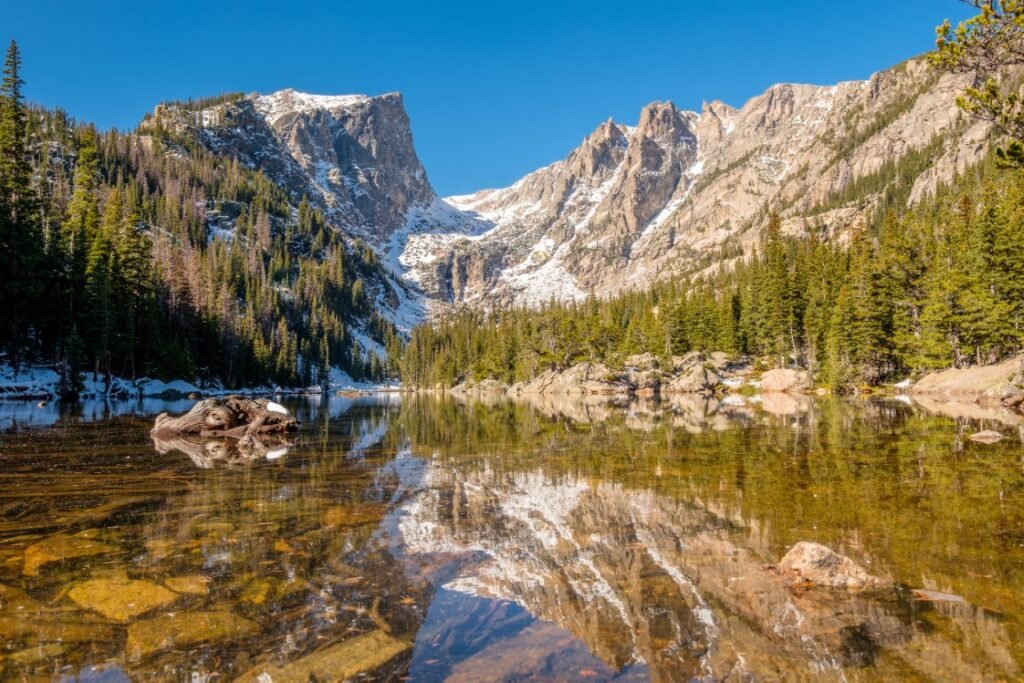
Rocky Mountain is a spectacular introduction to alpine scenery, and it works surprisingly well for toddler families because of the combination of drive-up highlights and a handful of genuinely stroller-accessible trails.
Bear Lake is the iconic starting point. The Bear Lake Loop Trail is a 0.5-mile flat loop on hard-packed dirt around a stunning glacial lake with views of multiple peaks — perfect for an all-terrain stroller or a confident toddler walker. From Bear Lake, you can also admire the surrounding mountains without hiking anywhere at all, which is sometimes exactly what you need on a toddler day.
Trail Ridge Road, the highest continuous paved road in the United States at over 12,000 feet, is a drive-through highlight your toddler can experience entirely from the comfort of a car seat. Stop at the Alpine Visitor Center (11,796 feet) for snacks and the surreal experience of standing above the treeline — tundra, wildflowers, and mountain views in every direction.
Wildlife viewing is excellent throughout the park. Elk are spotted regularly near Moraine Park, and fall (September–October) brings the elk rut, when bull elk bugle loudly across the meadows — a sound that tends to stop toddlers in their tracks.
Toddler tip: Altitude affects toddlers just as it affects adults — sometimes more, since they can’t articulate how they’re feeling. Spend your first day in Estes Park (gateway town, elevation 7,522 feet) before heading into the higher park elevations. Watch for symptoms of altitude sickness: unusual fussiness, loss of appetite, or lethargy beyond normal toddler behavior.
7. Olympic National Park (Washington)
Stroller-friendly: Yes, on several trails including the Hall of Mosses Best season: June–September
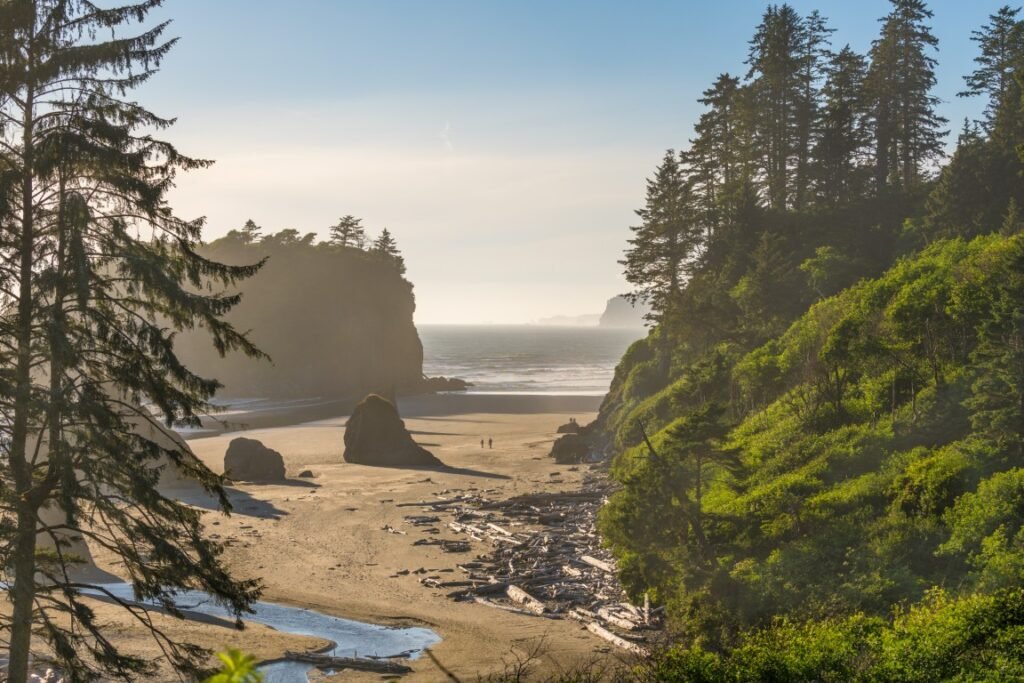
Olympic is three parks in one — rainforest, mountains, and wild Pacific coastline — which gives toddler families an extraordinary variety of sensory experiences in a single trip.
The Hoh Rain Forest is where most toddler families fall in love with Olympic. The Hall of Mosses Trail is a 0.8-mile loop through ancient maple trees draped in thick, billowing green moss — a landscape so otherworldly that even very young children react with visible wonder. The trail is relatively flat and accessible for all-terrain strollers. The adjacent Spruce Nature Trail (1.2 miles) is slightly more rugged but still very manageable.
The Ruby Beach and Rialto Beach sections of the Olympic coastline offer the kind of unstructured outdoor play that toddlers thrive on — driftwood to climb, tide pools to peer into, waves to run from, and enormous sea stacks rising from the Pacific. There’s no “trail” required; you park, walk a short path to the beach, and let your toddler explore.
At the north end of the park, the Cirque Rim Trail at Hurricane Ridge is a 1.6-mile paved and stroller-friendly loop with wildflower meadows and mountain views — plus frequent deer sightings that tend to produce pure toddler joy.
Toddler tip: Olympic’s weather is famously unpredictable. Bring waterproof layers for your toddler regardless of the forecast, and consider waterproof boots for beach days. Mud puddles in the rain forest are basically inevitable and should be leaned into rather than avoided.
Carrier vs. Stroller: The Great National Park Debate
Every parent traveling with a toddler to a national park faces the carrier-versus-stroller question, and the answer is almost always: bring both if you can, or choose based on the specific park.
A hiking backpack carrier (brands like Osprey or Deuter make excellent ones) opens up every single trail in every single park — nothing is off-limits when your toddler is on your back. The trade-off is physical effort on your end, and a weight limit that matters more the older your toddler gets. Most carriers max out comfort around 40–45 pounds.
A stroller — ideally an all-terrain jogging stroller rather than a lightweight travel stroller — works beautifully on paved trails and packed-dirt paths, and has the advantage of giving toddlers a comfortable place to nap during the day. At parks like Yellowstone, Great Smoky Mountains, and Zion’s Pa’rus Trail, a good stroller gets you everywhere you need to go.
The smartest approach for most national park trips: bring the carrier as your primary tool for trails, and bring a lightweight compact stroller for visitor centers, gateway towns, and any flat, paved sections where you want your arms back.
Essential Survival Tips for National Parks with Toddlers
Work around nap time, not against it. The single most common mistake toddler families make at national parks is scheduling a big hike during the midday nap window. Hit the trail early (before 9am if possible), build in a midday break for eating and napping, then head back out in late afternoon when temperatures drop and energy returns.
Pack double the snacks you think you need. Snacks are currency in toddler negotiations. Trail mix, squeeze pouches, crackers, fruit — a well-timed snack can add 20 minutes to any hike. Never be caught snackless.
Lower your mileage expectations dramatically. A reasonable toddler hiking pace is about 0.5–1 mile per hour on easy terrain, with frequent stops. Plan accordingly and you’ll feel like you’re succeeding. Plan for adult mileage and you’ll feel defeated by 10am.
Let the toddler set the pace sometimes. The magic of national parks with toddlers isn’t in the miles covered. It’s in watching a two-year-old spend seven minutes examining a single interesting rock, or doing a full-body dance when they spot a squirrel. Leave time for that.
Download offline maps and the NPS app before leaving cell coverage. Cell service in most national parks is unreliable to nonexistent. Having offline maps, trail info, and ranger contact details downloaded in advance is basic preparedness that pays off constantly.
The Junior Ranger Program works younger than you think. Even three-year-olds can participate in abbreviated versions of the program with a parent’s help, and receiving the badge from a ranger at the end is a genuine highlight for small children. Ask at the visitor center what version works for your child’s age.
Last Words
The best national parks for toddlers share a common thread: they deliver wonder and beauty without demanding that your toddler perform as a capable hiker. The geyser doesn’t care that your three-year-old is only there for thirty seconds before asking for a snack. The sand dunes don’t require athletic endurance. The enormous ancient trees are impressive whether you walked two miles to reach them or fifty yards.
Pick a park that meets your toddler where they are, build your days around nap times and snack logistics, keep your expectations flexible, and let nature do the rest. You’ll be amazed at what sticks — not just for your toddler, but for you.
Looking for more family travel inspiration? Check out our complete guide to the best national parks for families and our picks for the best national parks for kids of all ages.