Here’s the thing about Midwest national parks: they don’t get the Instagram glory of Yosemite or the Grand Canyon, and they’re perfectly fine with that.
While everyone else is fighting for a timed entry permit to see a waterfall they’ve already seen 400 times on Pinterest, you could be watching your kid scramble up a prehistoric rock formation in South Dakota, discovering a cave decorated with crystalline boxwork formations that exist almost nowhere else on Earth, or standing on a giant sand dune with the Chicago skyline visible across the shimmering expanse of Lake Michigan. Not bad for the so-called “flyover states.”
The Midwest is home to more than 60 units of the National Park Service, spanning prairies, lakeshores, river systems, badlands, caves, and some genuinely spectacular landscapes that most American families have never visited. The crowds are smaller. The entry fees are lower. The parking is (mostly) manageable. And the range of things to see and do with kids is wider than you’d expect.
This guide covers the best Midwest national parks for families — the ones with the right combination of kid-friendly trails, memorable activities, and practical accessibility for parents who are hauling snack bags and Junior Ranger workbooks. Let’s get into it.
How We’re Defining “Midwest” Here
For this guide, we’re working with the traditional Midwest states: Illinois, Indiana, Iowa, Michigan, Minnesota, Missouri, Ohio, North Dakota, South Dakota, and Wisconsin. The list skews toward parks with the strongest family-friendly trail systems and hands-on activities — because that’s what actually matters when you’ve got children in tow.
1. Badlands National Park (South Dakota)
Best for: All ages; families who want to feel like they’ve landed on another planet Best season: Spring (May–June) and Fall (September–October); summer is doable but brutally hot Entry fee: $30/vehicle
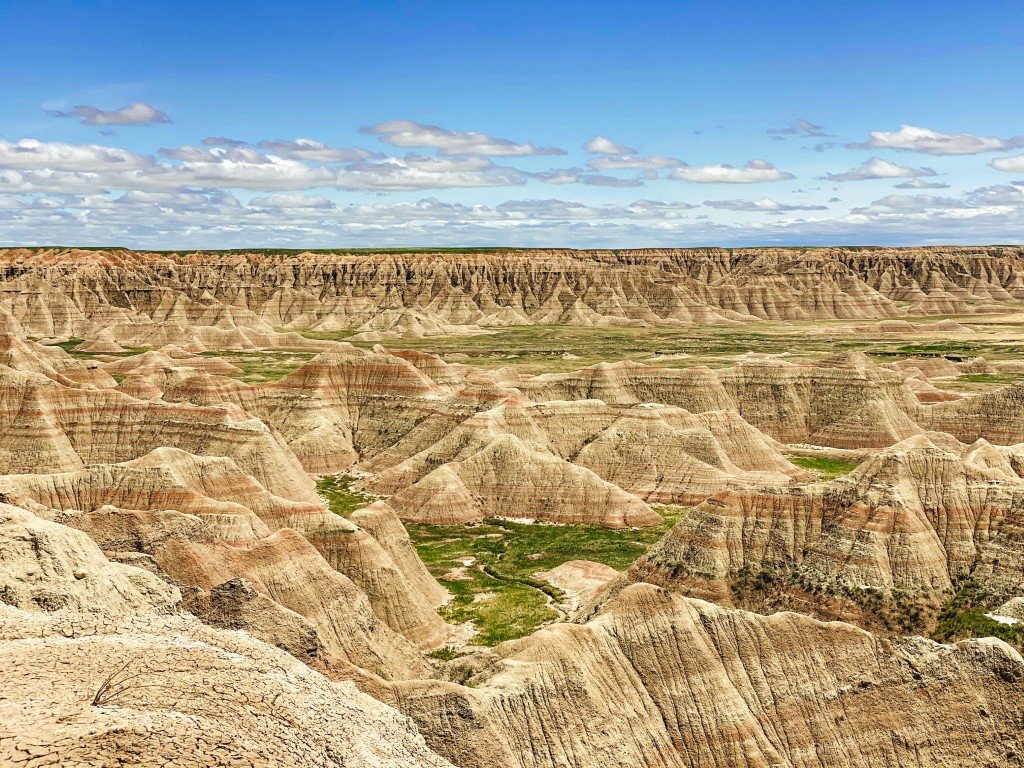
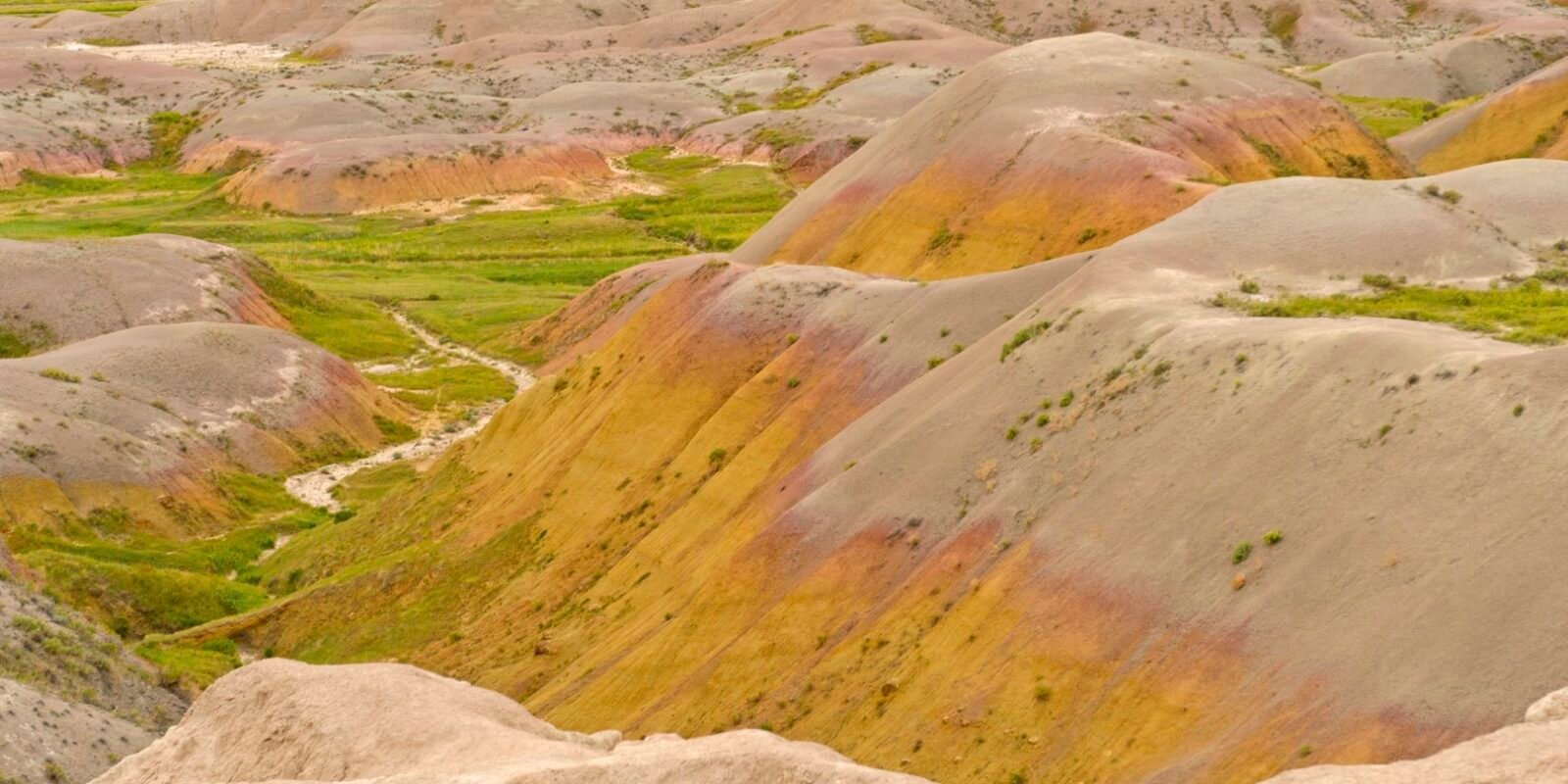
If you’ve never been to Badlands, prepare to genuinely not believe what you’re looking at. The park’s jagged formations of layered sediment — in bands of gold, orange, burgundy, and plum — stretch across the South Dakota prairie in an otherworldly landscape that seems less “national park” and more “film set for a sci-fi movie.” Kids lose their minds. Adults lose their minds. It’s one of the most visually stunning places in the country, and it happens to have some of the most family-friendly trails in the entire national park system.
The Fossil Exhibit Trail (0.25 miles, fully accessible boardwalk) is the perfect first stop for families with young children. Fossil replicas and interpretive exhibits line the path, showing the ancient creatures that roamed this area long before humans arrived. It takes about 15–20 minutes, kids can read every sign, and it sets up the geological story of everything they’ll see the rest of the day.
The Door Trail (0.75 miles round trip, partially accessible boardwalk) is a must. A short boardwalk leads through a natural “door” in the Badlands Wall into the canyon on the other side, where the trail becomes an open, free-form scramble marked by yellow posts. There is no beaten path — you’re literally rock-hopping across the canyon floor, following the markers at your own pace. Kids who need a trail with a sign every ten feet might find this stressful; adventurous kids will absolutely love it.
The Window Trail (0.25 miles, boardwalk) pairs perfectly with the Door Trail since both share a parking lot. This short boardwalk ends at a natural window carved through the Badlands Wall, framing a dramatic view of the canyon below. Do both trails back to back; you’ll be done in under an hour with two genuinely spectacular experiences.
For older or more adventurous kids, the Notch Trail (1.5 miles round trip, AllTrails’ highest-rated kid-friendly trail in the park at 4.8 stars from nearly 8,600 reviews) is the crown jewel. It involves climbing a log ladder up the Badlands Wall — which sounds scarier than it is; families regularly report 5- to 7-year-olds navigating it with no problem — and walking along a narrow ledge to a panoramic viewpoint over the White River Valley. Go in the evening to avoid lines at the ladder.
Kid-friendly activities beyond hiking: Badlands has an open hike policy, meaning you’re allowed to go off-trail and climb on the rock formations at your own risk — which is heaven for kids with energy to burn. Roberts Prairie Dog Town is a guaranteed wildlife hit: the colony is enormous, the animals are active and hilarious, and kids could watch them for an hour. Bison, bighorn sheep, and pronghorn are regularly spotted from the road. The Paleontology Lab (open in peak season) lets kids watch real paleontologists working through a glass window, which is extraordinary if you arrive at the right time. The Junior Ranger program — pick up a workbook at the Ben Reifel Visitor Center — is one of the best in the national park system.
Family tip: There is almost no shade anywhere in Badlands. Zero. If you’re visiting in summer, be at the trailheads by 8 a.m. and done hiking by 10:30. The temperature climbs fast and the exposed rock radiates heat like a frying pan. Bring twice as much water as you think you need, real sun hats (not baseball caps — your kids’ ears and necks need protection), sunscreen, and snacks that won’t melt into a puddle. Stock a cooler before you enter.
Check out this Private Tour of the Badlands with Local Experts (kids under three are free!).
2. Indiana Dunes National Park (Indiana)
Best for: Families within driving distance of Chicago, Milwaukee, or Indianapolis; beach lovers; biologically curious kids Best season: Spring and Fall for lighter crowds; summer for beach season (come early on weekdays) Entry fee: $25/vehicle
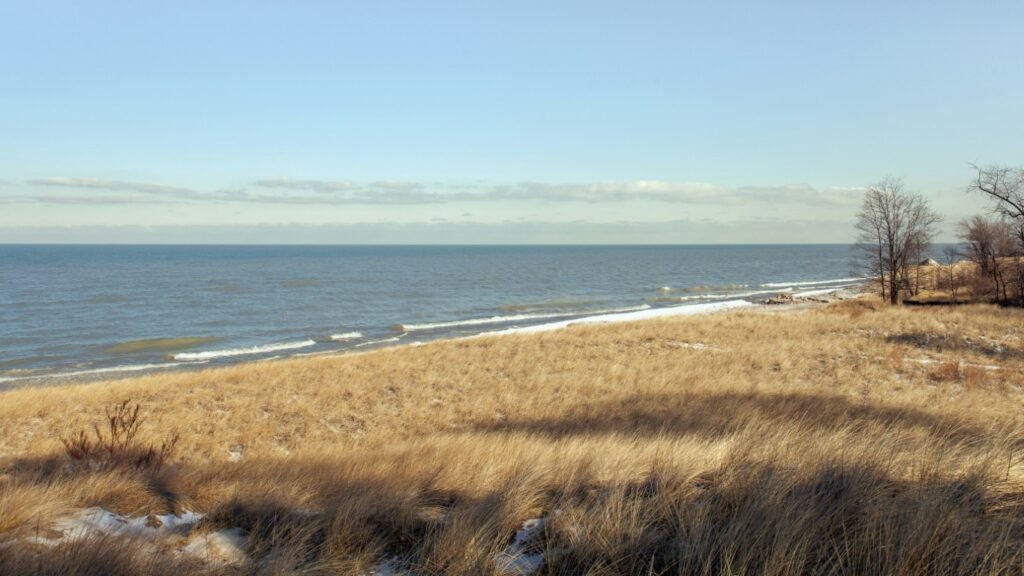
Indiana Dunes is one of the most underrated national parks in the country, full stop. National Geographic named it a “Best For Families” park, and it earns that designation through sheer variety. In a single day you can hike through a globally rare black oak savanna, watch birds in a Great Lakes marsh, splash in Lake Michigan, and peer at a 1930s World’s Fair home that was literally transported to the dunes from Chicago. On a clear day from the top of the West Beach Trail dunes, you can see the Chicago skyline across the water — which is genuinely surreal and memorable.
The Dunes Succession Trail is the most-loved family hike in the park — a boardwalk-and-stairs trail (250 stairs, so prepare the kids) that climbs to a sweeping overlook of the beach, passes through dunes forest, and emerges at West Beach. The large shelter at West Beach has washing stations for sandy feet, because you are going to need them.
For families with young children or strollers, the Calumet Dunes Trail (0.5 miles, paved) is the right call — a short, accessible loop that tells the story of the ancient Lake Michigan shoreline from 12,000 years ago. Genuinely interesting for curious school-age kids, genuinely manageable for toddlers.
The Bailly Homestead and Chellberg Farm Loop (2.1 miles) is a living history experience that older kids particularly enjoy. The Chellberg Farm is an active working farm with livestock and seasonal programming. It’s one of those spots that makes history tangible rather than textbook.
One highlight that families consistently love: Mount Baldy, one of the tallest dunes in the park, is closed for general public access because the migrating dune buries trees alive and then uncovers their dead roots, creating hidden underground cavities that have swallowed visitors. The only safe way to see it is on a ranger-led tour — and the story rangers tell about why the dune is closed is one of the most fascinating bits of natural history in the whole park. Check the NPS website for tour availability.
Kid-friendly activities beyond hiking: The 3 Dune Challenge at Indiana Dunes State Park (adjacent, separate entrance fee) climbs the three tallest dunes for a free sticker at the end — 1.5 miles of tough terrain and nearly 600 vertical feet of pure sand. Kids treat it like a personal conquest. Summer ranger programming includes fireside chats at the Portage Lakefront Pavilion on Wednesday evenings with marshmallow roasting. Bring the makings for s’mores.
Family tip: Indiana Dunes spans multiple non-contiguous sections with separate parking areas, and some sections have their own entrance fees. The NPS app (download before you lose signal) has maps of all sections. Note that Indiana Dunes State Park and Indiana Dunes National Park are neighbors but different entities with different fees — decide which sections you want before you arrive, or budget for both if you have two days. Consider this Indiana Dunes National Park Self-Guided Audio Tour.
3. Cuyahoga Valley National Park (Ohio)
Best for: Families who think the Midwest doesn’t have dramatic scenery — it does; waterfall lovers; train enthusiasts Best season: Year-round; Fall is spectacular; Spring brings waterfalls at their peak Entry fee: FREE

Let’s get this out of the way immediately: Cuyahoga Valley costs nothing to enter. Not just cheap — free. And it might be the single most surprising national park in the Midwest for families who arrive without high expectations and leave talking about coming back. Check out this Cuyahoga Valley National Park Self-Guided Driving Audio Tour.
Tucked between Cleveland and Akron in northeastern Ohio, this 33,000-acre park traces 22 miles of the Cuyahoga River through a valley of sandstone ledges, forested hills, cascading waterfalls, and historic canal infrastructure. It doesn’t look like the Midwest people imagine when they picture Ohio. It looks like somewhere you’d go specifically to see.
Brandywine Falls is the park’s showpiece. The 65-foot waterfall is accessible via a short boardwalk from a large parking lot with restrooms — less than a quarter mile each way, meaning it’s genuinely manageable with toddlers. A staircase connects upper and lower viewing decks, and the lower deck puts you close enough to feel the spray. It’s one of the most accessible dramatic waterfalls in any Midwest national park.
The Ledges Trail (2.4 miles loop, AllTrails’ top-rated kid-friendly hike in the park at 4.7 stars from nearly 12,000 reviews) is the trail most families name as their absolute favorite. The loop winds through massive Sharon Conglomerate rock formations — huge sandstone ledges, hidden crevices, mossy overhangs, and a rock shelter that looks exactly like a cave and functions as one for the purposes of child delight. The whole trail has an enchanted forest vibe, and the Ledges Overlook at the end delivers a panoramic view as a reward. Budget more time than you think. A two-and-a-half-year-old has been reported completing this trail. Kids who like to climb and discover things will not want to leave.
The Ohio and Erie Canal Towpath Trail is the park’s backbone — 20 miles, flat, wide, and paved, running the full length of the park along the historic canal route. It’s perfect for biking (rent bikes at Century Cycles inside the park) or stroller walking, and even a few miles gives families a strong sense of the park’s scale and history.
Kid-friendly activities beyond hiking: The Cuyahoga Valley Scenic Railroad is genuinely one of the best things in this park — 1950s-era coaches running through 51 miles of park scenery, with options to combine a one-way train ride with a bike or hike back to your starting point. The railroad also runs family-themed excursions (superhero rides, princess rides, holiday trains) throughout the year. The Everett Covered Bridge — the only remaining covered bridge in Summit County — has a shallow stream underneath it where children will inevitably end up wading, skipping rocks, and losing track of time. Budget an unplanned hour there.
Family tip: Cuyahoga sits within a populated area, meaning restaurants, restrooms, and supply stops are never far away. This is a genuine advantage over more remote parks. Szalay’s Farm & Market, just outside the park, is a beloved fall destination for corn, pumpkin picking, and a corn maze your kids will take very seriously.
4. Wind Cave National Park (South Dakota)
Best for: Cave-obsessed kids; families combining with Badlands or Mount Rushmore; wildlife watching Best season: May–October for cave tours; wildlife excellent year-round Entry fee: Free to enter (cave tours have separate fees)
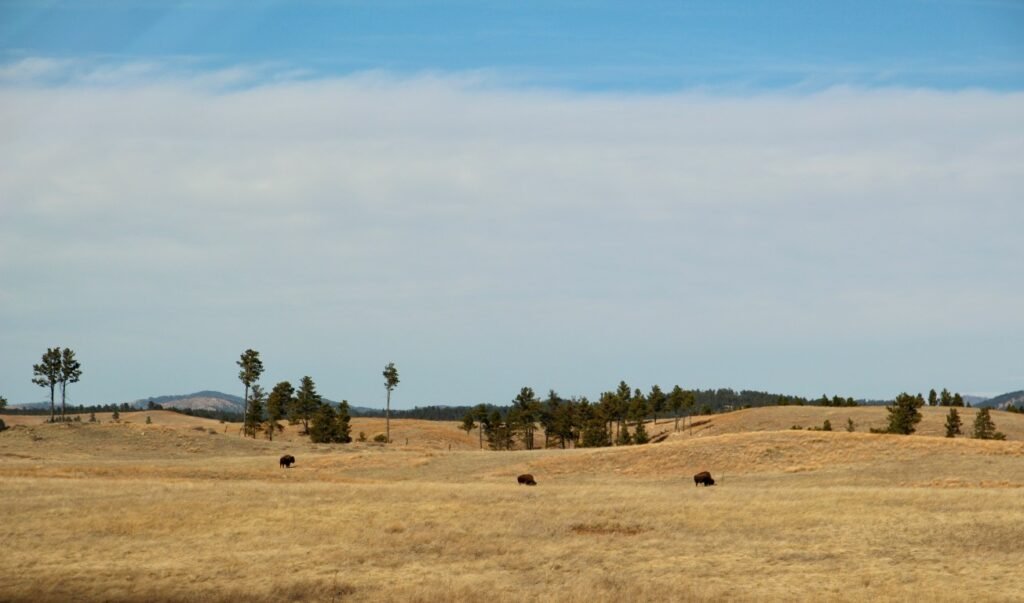
If you’re making the trip to Badlands — and you should — Wind Cave is 90 minutes away and absolutely worth adding to your itinerary. Immerse yourself using this Wind Cave National Park Self-Guided Audio Tour. The park protects both a remarkable underground cave system and a thriving mixed-grass prairie above it, which means one park gives you two completely different natural worlds.
The cave tours are the centerpiece. The Natural Entrance Tour (about 1.25 miles underground, roughly 75 minutes, best family reviews) takes you through passages decorated with boxwork formations — incredibly intricate thin calcite fins that look like honeycomb walls built by the world’s most patient sculptor. Wind Cave has more boxwork than any other cave on Earth. Kids who’ve done cave tours before will find something genuinely different and distinctive here. Buy tickets online in advance; they sell out in peak season.
Above ground, 30-plus miles of hiking trails traverse rolling prairie with bison, pronghorn, and prairie dogs. The Rankin Ridge Trail (1.4 miles loop) climbs to the park’s highest point and an old fire tower with panoramic Black Hills views.
Family tip: Combine Wind Cave with a stop at neighboring Custer State Park. The famous “begging burros” — descendants of a historic trail-ride herd — will walk right up to your car looking for carrots, and your children will talk about this for the rest of the trip. The park does not classify them as wildlife, so feeding them is accepted (and wildly popular with families).
5. Theodore Roosevelt National Park (North Dakota)
Best for: Families who want spectacular wildlife and Badlands scenery without the Badlands crowds Best season: May–September; sunrise and sunset are unmissable Entry fee: $30/vehicle
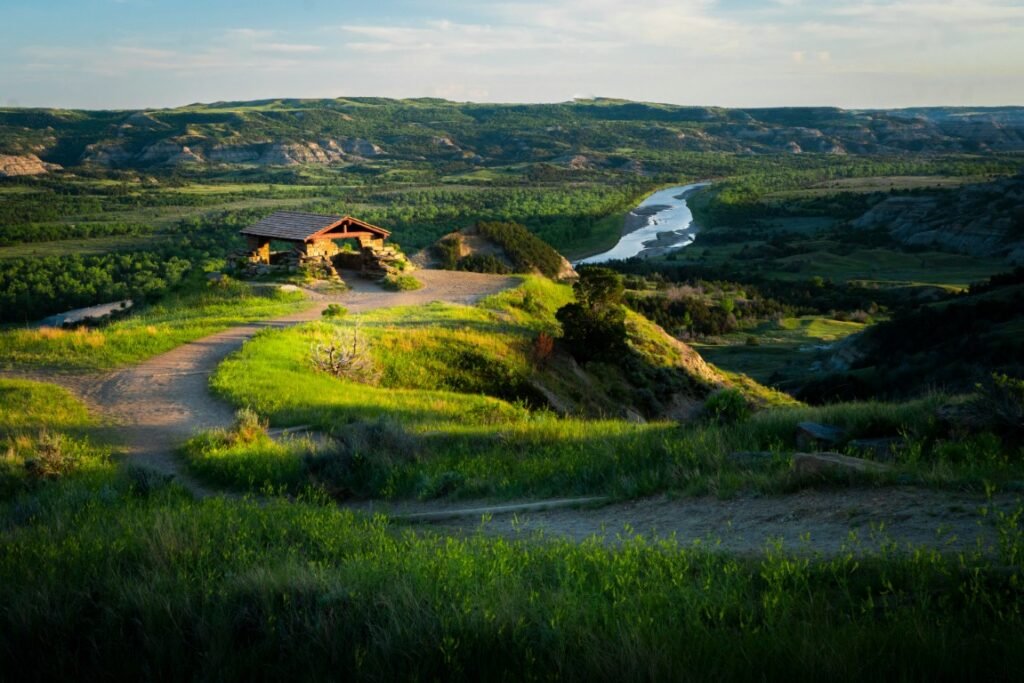
Theodore Roosevelt is consistently called one of the most underrated parks in the entire national park system, and it’s hard to disagree. Spread across three units in the North Dakota Badlands, it protects wild horses, bison, bighorn sheep, and prairie dog towns against a backdrop of dramatically eroded buttes, colored canyons, and the winding Little Missouri River. Visitation is a fraction of more famous western parks — which means your family can actually stop and watch a bison herd cross the road without a line of cars backed up behind you.
The South Unit, near the town of Medora, is the most accessible for families. The Scenic Loop Drive (36 miles) delivers wildlife sightings at nearly every stop. The Wind Canyon Trail (0.4 miles round trip, easy) leads to a sandstone overlook above a river bend that is one of the most genuinely beautiful views in the park. Pack a picnic.
The North Unit is farther and quieter, with bighorn sheep that frequently appear near the River Bend Overlook — seeing them navigate canyon walls in silence is one of those unrepeatable national park moments.
Family tip: The gateway town of Medora is a legitimate family destination in its own right. The Medora Musical outdoor amphitheater show runs nightly in summer and is enthusiastically family-friendly. The Painted Canyon Visitor Center on I-94 has stunning badlands views and is worth the stop even if you’re just passing through. Download maps before you lose cell signal. And consider this Self Guided Audio Tour of Theodore Roosevelt National Park.
6. Sleeping Bear Dunes National Lakeshore (Michigan)
Best for: Beach families; dune climbers; Great Lakes scenery without an ocean price tag Best season: June–September for swimming; Fall for fall color and lighter crowds Entry fee: $25/vehicle
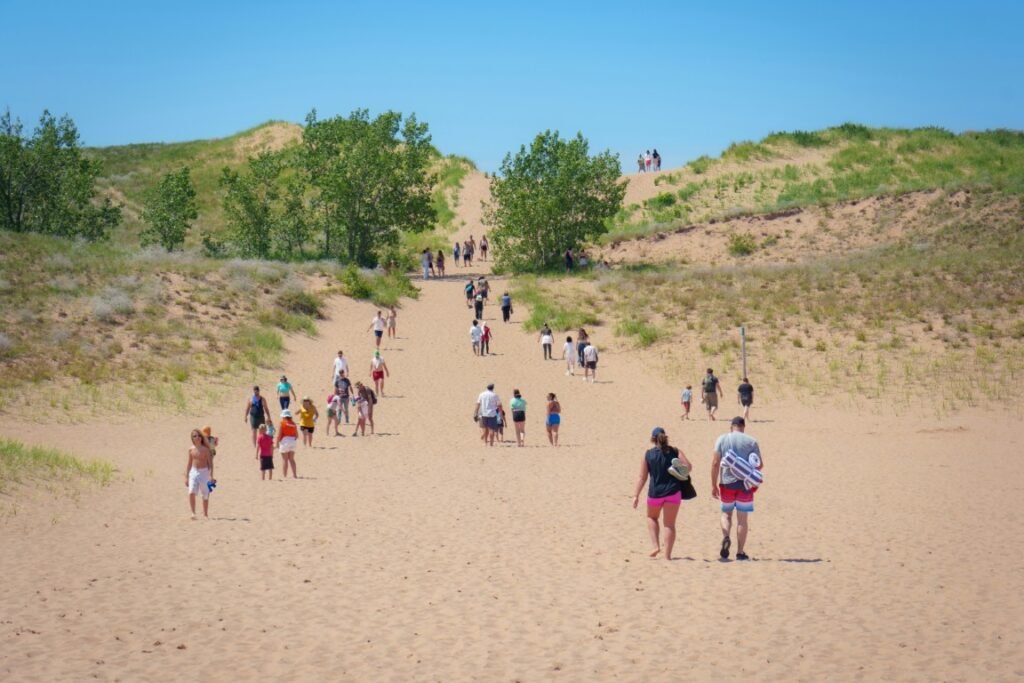
Sleeping Bear Dunes is one of the most visually beautiful parks in the Midwest — sugar-sand beaches, turquoise Lake Michigan water, and massive dunes that drop hundreds of feet to the shoreline below. The signature experience is the Dune Climb: a wide-open sand dune where you climb as far as your legs will carry you, then run, roll, or slide back down. No trail, no rules, no wrong answers. It’s the kind of unstructured fun that kids aged 3 to 13 all access at exactly the same level of enthusiasm.
The Pierce Stocking Scenic Drive (7.4 miles one-way, paved, open to bikes) keeps delivering overlooks you didn’t expect. The Lake Michigan Overlook is the best viewpoint — two minutes from the parking lot, views that photograph beautifully, and a lake so blue it genuinely doesn’t look like freshwater.
The Pyramid Point Trail (2.7 miles round trip, moderate) rewards families who can handle some elevation gain with arguably the best coastal views in the park — a high bluff over the bay, the Manitou Islands, and endless blue water.
Family tip: The Dune Climb parking lot fills fast on summer weekends — arrive by 9 a.m. or accept the consequences. Don’t miss Glen Haven Historic Village, a restored 19th-century maritime village with a working boathouse and cannery museum — free with your park pass and a genuinely interesting 45-minute stop.
7. Gateway Arch National Park (Missouri)
Best for: History lovers; urban families; road trip stopovers; any child who enjoys riding a tiny pod up the inside of a giant arch Best season: Year-round Entry fee: Free to enter (tram to the top: ~$16 adults, $8 children)

Gateway Arch is tiny by national park standards — but it punches well above its weight for families. The Museum at the Gateway Arch (free, beneath the arch) traces the full story of westward expansion and the arch’s construction through interactive exhibits that hold kids’ attention far better than a standard history museum. Budget at least 90 minutes down there. Make the most of it with a Gateway Arch National Park Self Guided Audio Walking Tour.
The tram ride to the top is the main event. Small pods that tip and pivot as they travel up the arch’s curved interior, a four-minute journey each way, and views from 630 feet over the Mississippi River and St. Louis skyline. Kids generally find the tram itself thrilling regardless of the view. Buy tickets online in advance.
Family tip: Gateway Arch pairs perfectly with the nearby St. Louis City Museum — not a national park, but possibly the most extraordinary children’s play space in the country, with caves, slides, and a school bus hanging off the roof. Together they make an exceptional St. Louis family weekend.
Planning Your Midwest National Park Trip: Practical Tips for Families
The America the Beautiful Annual Pass is worth it. At $80/year, it covers entry to Badlands, Theodore Roosevelt, Indiana Dunes, Sleeping Bear Dunes, and Wind Cave. Cuyahoga Valley and Gateway Arch are free regardless.
Download everything before you lose signal. Cell service is limited or non-existent in Badlands, Wind Cave, Theodore Roosevelt, and large portions of Sleeping Bear Dunes. Download the NPS app, save your park maps offline, and keep a printed gate map in the car.
The Great Plains heat is no joke. In Badlands and Theodore Roosevelt, summer temperatures regularly hit 100°F with no shade on the trails. Hike by 9 a.m., back to the car by 11 a.m., return for an evening hike. Stock a cooler with frozen water bottles.
Book cave tours in advance. Wind Cave cave tours sell out in peak summer. Check recreation.gov well before your trip.
The Junior Ranger program is your secret weapon. Every park on this list has one. Cuyahoga Valley even has a “Junior Junior Ranger” program for toddlers. Start collecting badges at your first visitor center and make it the throughline of the whole trip — kids take it more seriously than you’d expect.
South Dakota is a natural multi-park itinerary. Badlands, Wind Cave, Mount Rushmore, and the Black Hills are all within 90 minutes of each other. A four- to five-day South Dakota road trip is one of the best family itineraries in the entire Midwest.
The Midwest national parks don’t have the marketing machine that Yellowstone or the Grand Canyon do. They don’t have the line of photographers at every overlook. They don’t always show up on the lists.
What they do have: your kid standing at the edge of a canyon that looks like it was imported from Mars, staring at it in complete silence. Your family scrambling through a gap in the Badlands Wall following yellow poles across open canyon floor. Your eight-year-old running full-speed down a sand dune while your toddler watches from the bottom with their mouth open. A 65-foot waterfall reachable by a ten-minute boardwalk walk in an Ohio park that costs exactly nothing to enter.
These are the experiences. The Midwest has them. You just have to show up.
Planning your family’s national park adventure? Check out our guide to the best national parks for families.