Let’s be real for a second. The idea of hiking a national park with kids sounds dreamy on Instagram. The reality, however, might involve one child announcing their legs “don’t work anymore” approximately 400 meters into the trail, another who desperately needs the bathroom right as you reach the most scenic overlook, and a full-scale meltdown over the snack allocation.
We’ve all been there.
The good news? The right national park completely changes the equation. When you pick a park that’s genuinely built for families — with easy trails, short distances to the wow moments, and activities that actually hold kids’ attention — you end up with those magical outdoor memories you were picturing in the first place.
This guide covers the best national parks for kids in the US, with a focus on easy and comfortable hikes, standout kid-friendly activities, and honest tips from parents who’ve done it. Whether you’re planning your family’s first national park trip or you’re seasoned pros looking for your next adventure, this list has something for every age group — from toddlers in carriers to tweens who need a little more action to stay engaged.
What Makes a National Park Kid-Friendly?
Before diving in, it helps to know what we’re actually evaluating. When choosing the best national parks for families with kids, we’re looking at a few key factors:
Trail accessibility. Short, relatively flat trails with clear paths win every time. Under 3 miles round trip is ideal for younger kids; older kids and tweens can handle 5–6 miles if the scenery is worth it.
Built-in wow moments. The best parks for kids deliver the payoff early. Geysers, giant trees, sand dunes, cave formations — the kind of things that make kids stop mid-complaint and actually forget about their tired legs.
The Junior Ranger Program. This is one of the most underrated tools in a family traveler’s toolkit. Available at almost every national park, the Junior Ranger program gives kids a booklet of age-appropriate activities to complete during their visit. When they’re done, they take an oath and receive an official badge. Kids absolutely love it, and it keeps them engaged the entire visit.
Facilities and logistics. Visitor centers, accessible restrooms, picnic areas, and ranger-led programs matter a lot when you’re traveling with little ones.
With all of that in mind, here are the parks that consistently earn top marks.
1. Great Smoky Mountains National Park (Tennessee/North Carolina)
Best for: Families of all ages, first-time national park visitors Entry fee: FREE — the only major national park with no admission fee
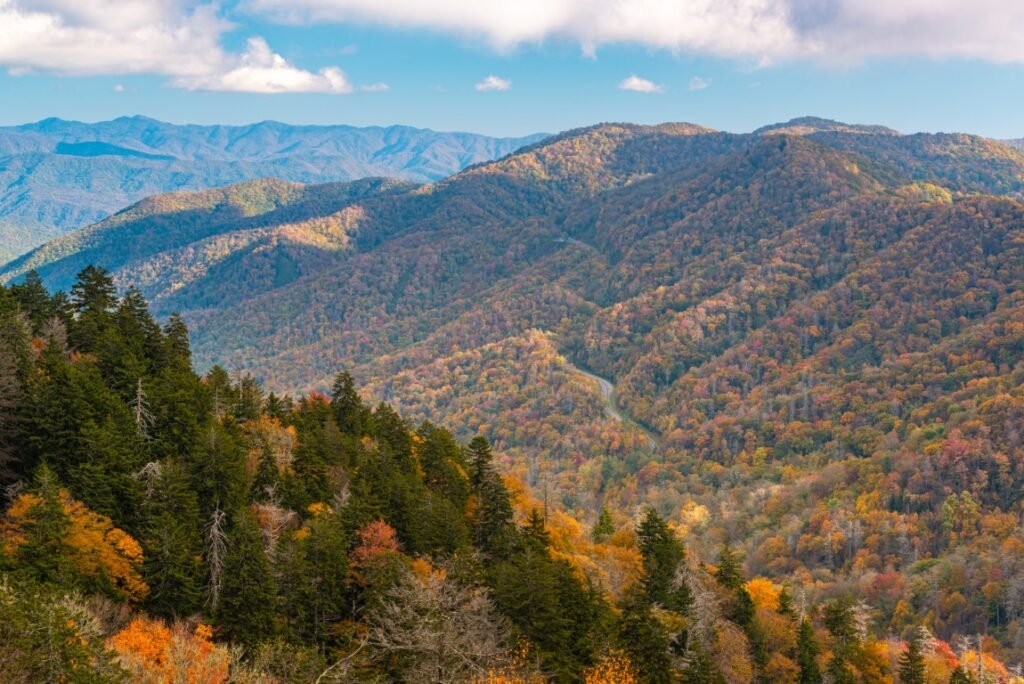
If you’re looking for the best national park for kids who’ve never done one before, Great Smoky Mountains is your answer. It’s the most visited national park in the country for a reason: it’s accessible, beautiful, endlessly varied, and absolutely free.
For younger kids, the Laurel Falls Trail is a paved 2.6-mile round trip walk through forest to a stunning waterfall — one of the most popular hikes in the entire national park system, and for good reason. The pavement means strollers can make it partway in, and the waterfall at the end is genuinely worth every step. The Cades Cove Loop is another family classic — a scenic 11-mile valley loop you can drive (or bike) that’s loaded with wildlife. White-tailed deer and black bears are spotted here regularly, which tends to cause immediate, dramatic excitement in children of all ages.
The park’s Junior Ranger program is excellent and genuinely educational. Pick up a booklet at the Sugarlands or Oconaluftee visitor center on your way in.
Family tip: Visit in spring (April–May) for wildflower blooms, or fall (October) for peak leaf color. Summer gets very crowded — arrive at trailheads before 9am if you want a parking spot. Or consider taking this classic Great Smoky Mountains National Park guided tour.
2. Arches National Park (Utah)
Best for: Kids who love to scramble and explore Best season: Spring (March–May) and Fall (September–October)
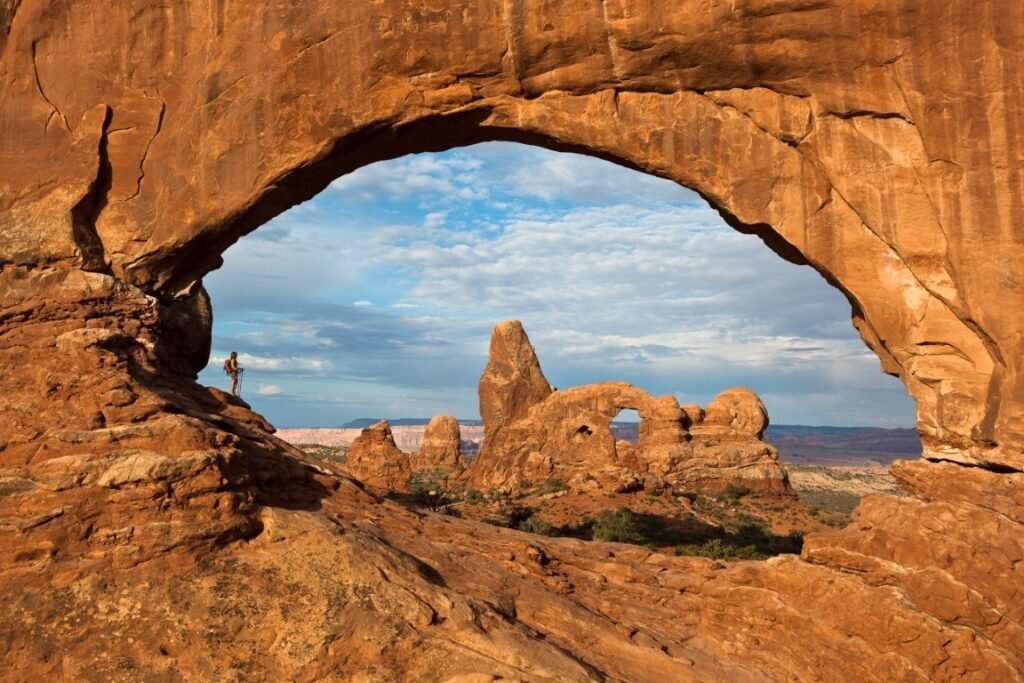
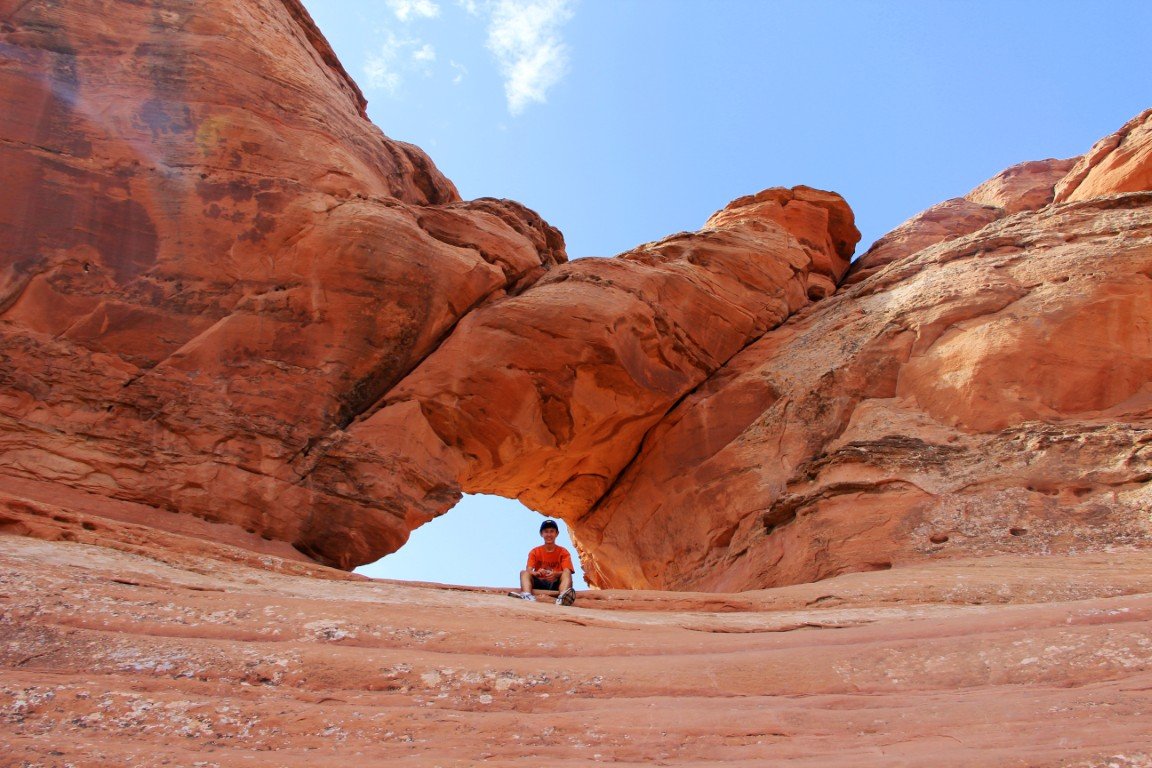
Arches might just be the most photogenic park on this entire list, and one of the few places where you can genuinely hike to an iconic, postcard-worthy landmark with young children in tow. The whole park is relatively compact, meaning you spend less time driving between highlights and more time actually exploring.
Double Arch is a must-do with kids — a flat, 0.5-mile round trip trail that ends at two massive natural arches you can actually walk under and scramble on. Little ones are absolutely mesmerized by the scale of it. For older kids and adults, the hike to Delicate Arch — Utah’s most iconic rock formation — is about 3 miles round trip with around 480 feet of elevation gain. It’s doable for most kids over age 6 or 7, especially if you build in snack breaks. The moment you crest the last slickrock slope and the arch appears out of nowhere is genuinely spectacular.
Windows Trail is another easy 1-mile loop that delivers two enormous arches and sweeping red rock views — perfect if you want maximum scenery for minimum effort.
Family tip: Go in spring or fall. Summer temperatures routinely exceed 100°F, which is miserable with kids. Bring twice as much water as you think you’ll need regardless of season. You may also want to do a combo Arches and Canyonlands driving tour.
3. Yellowstone National Park (Wyoming/Montana/Idaho)
Best for: Curious kids, wildlife lovers, tweens and teens Best season: Summer (June–August)
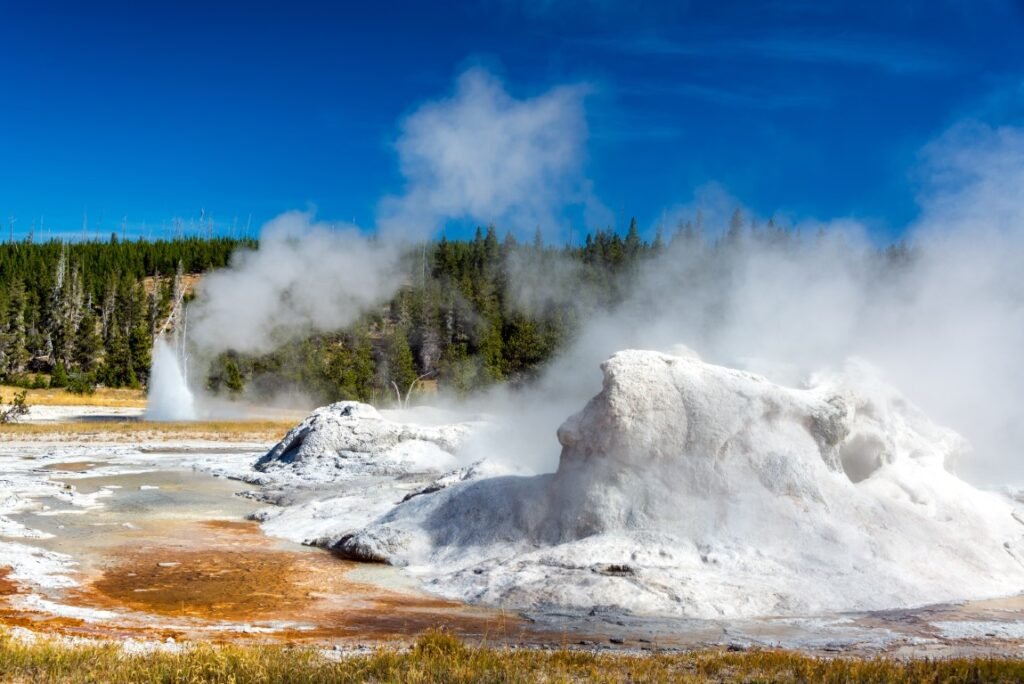
Yellowstone is basically a science lesson brought to life, and kids — especially the ones who are normally hard to impress — tend to completely lose their minds in the best possible way. Bubbling mud pots, rainbow-colored hot springs, bison wandering across the road, and of course, Old Faithful erupting on a reliable schedule. It has a way of making even the most screen-addicted child look up and pay attention.
The Old Faithful area is the obvious starting point. The eruption itself takes about 1.5 to 5 minutes and shoots boiling water up to 185 feet in the air every 90 minutes or so — and you can check the predicted eruption time at the visitor center so you don’t miss it. After watching the geyser, walk the Upper Geyser Basin boardwalk trail (about 3 miles round trip, fully flat, and paved in sections) past dozens of other geysers and hot springs. It’s one of the best easy family hikes in any national park, period.
For wildlife, the Lamar Valley on the park’s east side is where you’re most likely to spot bison herds, wolves, and bears. Bring binoculars — wildlife viewing is best at dawn and dusk.
Family tip: Yellowstone is big. Break the park into geographic sections and plan to explore one section per day rather than trying to criss-cross the whole figure-eight road loop. Two or three days minimum is ideal. Here’s a 2-day Yellowstone National Park guided tour.
4. White Sands National Park (New Mexico)
Best for: Toddlers and young kids, sensory play enthusiasts, families who want something totally unique Best season: October–April
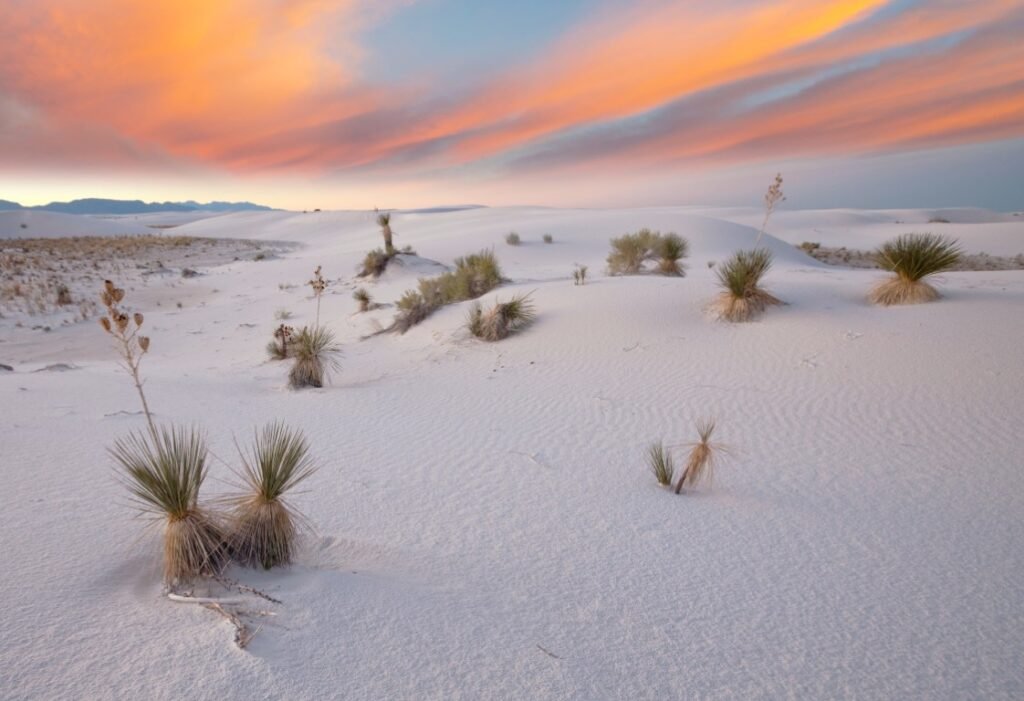
Here’s an unconventional pick that belongs at the top of every family’s list. White Sands is one of the most fun national parks for kids in the entire country — and it often flies under the radar because it lacks the name recognition of the bigger parks.
The park is exactly what it sounds like: miles upon miles of dazzling white gypsum sand dunes that look like snow but feel warm under your feet. Kids can run up and down the dunes, build sand castles, and sled down the slopes on plastic sleds (available for rent at the visitor center, or bring your own). There’s no “strenuous hike required” moment here — the dunes themselves are the activity, and kids can happily play for hours.
The Interdune Boardwalk is a flat 0.4-mile accessible loop perfect for strollers and little legs. The Dune Life Nature Trail (1 mile loop) introduces kids to the surprisingly rich desert ecosystem hiding in those white sands. At sunset, the park turns a soft golden-pink that’s breathtaking — rangers often lead sunset walks that are free with your park entry.
Family tip: Buy a plastic disc sled at the visitor center for around $20. You can return it for a partial refund when you leave, which makes it an incredibly affordable entertainment option. Wear closed-toe shoes — the gypsum crystals are fine but can irritate bare feet after a while.
5. Carlsbad Caverns National Park (New Mexico)
Best for: Kids who love caves, underground exploration, and something genuinely unlike anything they’ve ever seen Best season: Year-round
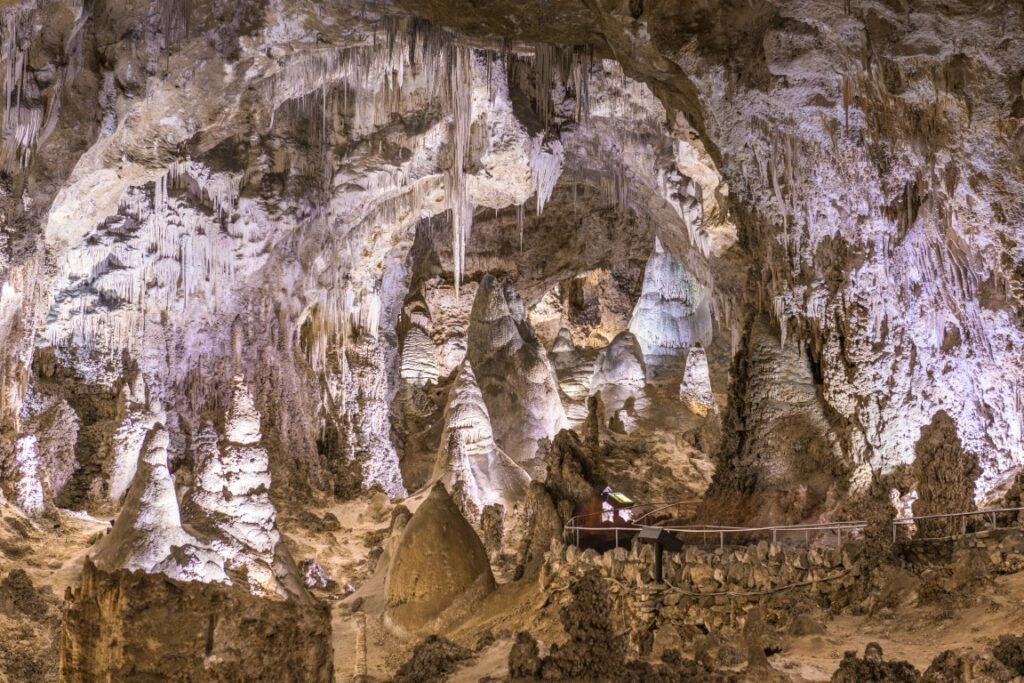
If you want to introduce your kids to a national park experience that will make their eyes go wide and keep them talking about it for years, Carlsbad Caverns is it. And unlike most parks on this list, it’s almost entirely unaffected by weather — being underground has its advantages.
The Big Room is the showstopper: one of the largest cave chambers in North America, accessible via an elevator directly from the visitor center. The walking trail through the Big Room is 1.25 miles on a paved, accessible path — flat, well-lit, and dotted with dramatic cave formations. Kids are consistently amazed. There’s also the option to hike down into the cave via the Natural Entrance Trail (1.25 miles, moderately steep), which feels genuinely adventurous for older kids.
If you time your visit right, the evening bat flight program is something special. Between May and October, a colony of nearly 400,000 Mexican free-tailed bats exits the cave at dusk in a spiraling, swirling mass that takes over 20 minutes to fully emerge. It is absolutely wild to witness, and kids love it.
Family tip: The cave sits at a constant 56°F regardless of outside temperatures, so bring a light jacket even if it’s 90°F on the surface. The contrast is jarring and kids get cold fast once you’re underground.
6. Joshua Tree National Park (California)
Best for: Rock scramblers, budding naturalists, families who like a laid-back pace Best season: October–April
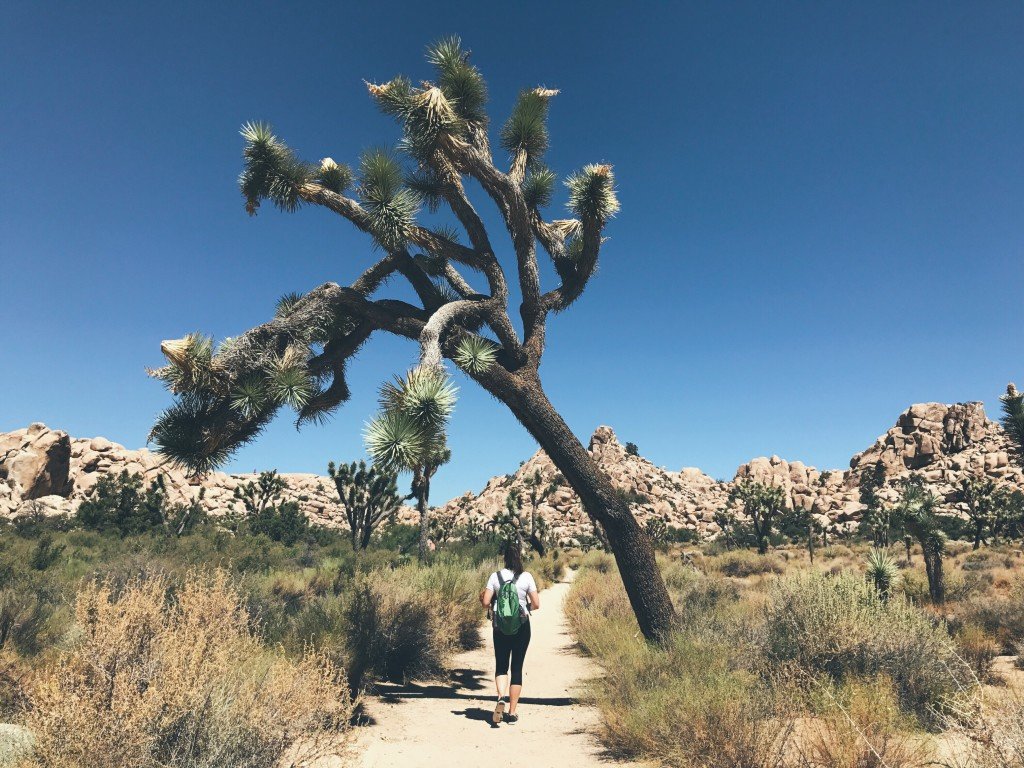
Joshua Tree is a park that rewards curiosity, and curious kids absolutely thrive here. The landscape is unlike anything else in the country — a collision of two desert ecosystems dotted with otherworldly Joshua trees, massive rounded boulders, and dramatic rock formations begging to be climbed.
The boulders are arguably the main attraction for kids. Unlike most parks where the trails are the experience, at Joshua Tree the rocks themselves become a giant playground. Families naturally gravitate to spots like Skull Rock (a 1.7-mile nature trail with a rock that genuinely looks like a skull), where kids can scramble freely while parents watch from the shade nearby. The Hidden Valley Trail is a flat 1-mile loop through a bowl of boulders that was historically used by cattle rustlers — the “secret hideout” narrative alone is enough to keep kids engaged the entire time.
The park is also one of the best stargazing destinations in the western US, and several campgrounds are positioned perfectly for a family night under the Milky Way.
Family tip: Avoid summer completely — temperatures regularly exceed 110°F. October through April is the sweet spot when the desert is comfortable and wildflowers bloom in spring. Enjoy a sound bath and stargazing during this immersive experience.
7. Acadia National Park (Maine)
Best for: Older kids, tweens, families who want variety Best season: Summer (June–August)
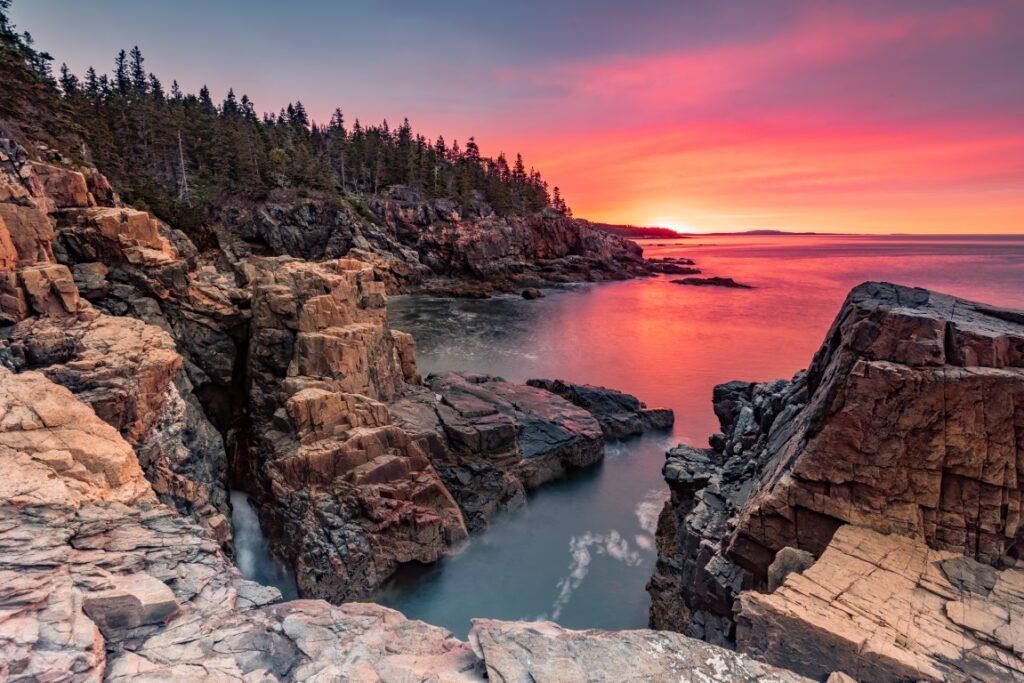
Acadia is the crown jewel of the East Coast national park system, and it earns a spot on this list because of its sheer variety. In a single day, you can bike the carriage roads, explore tide pools on the rocky coast, summit a mountain, and eat a lobster roll in Bar Harbor. It’s hard to run out of things to do here.
For younger kids, the carriage road network is magic. The 45 miles of wide, well-maintained gravel paths are car-free and scenic, perfect for family bike rides at whatever pace works for your crew. Bikes and trailer attachments are available for rental in Bar Harbor. For a short, achievable hike with a massive payoff, the Jordan Pond Path (3.5-mile loop, nearly flat) circles a pristine glacial pond beneath two rounded mountains called “The Bubbles.” Make sure to stop at the Jordan Pond House for their famous popovers at the end — it’s been a park tradition since 1895.
For older, more adventurous kids, the South Ridge Trail up Cadillac Mountain (7 miles round trip) offers sweeping views of the entire park and Maine coastline.
Family tip: Reserve your Cadillac Summit Road vehicle permit in advance if you plan to drive up — it’s required during peak season and sells out quickly. Explore the very best of Acadia National Park on this small-group tour. Also note that dogs are welcome on many of Acadia’s trails, making it a great option for families traveling with a furry member.
8. Sequoia & Kings Canyon National Parks (California)
Best for: Families who want to be humbled by nature Best season: Summer (June–September)
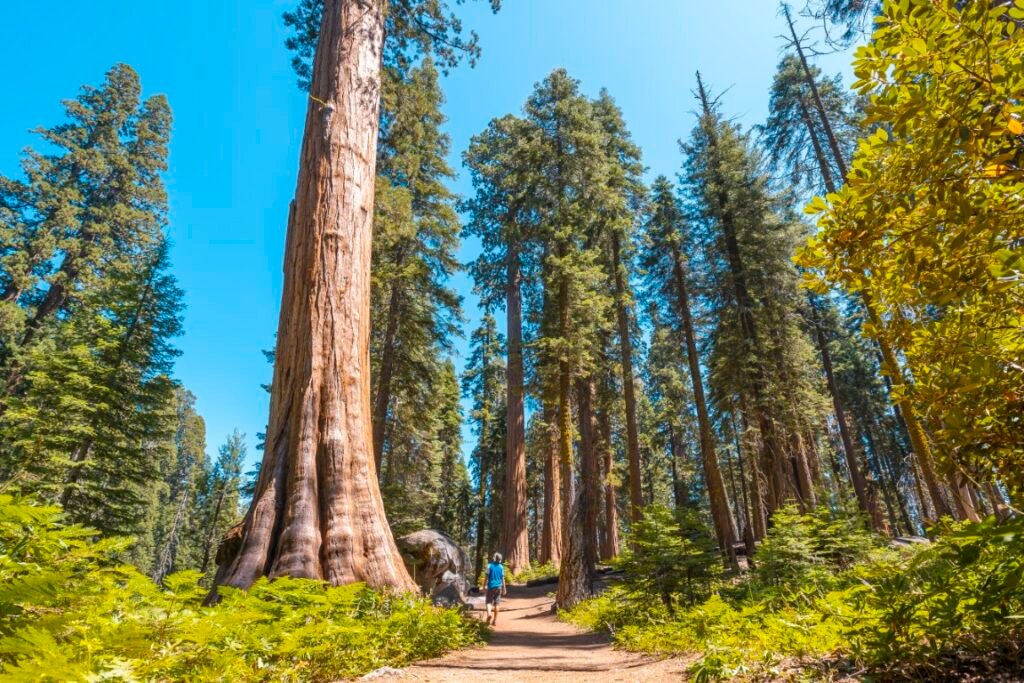
There is no better place to make a child feel genuinely small in the best possible way. Sequoia National Park is home to General Sherman — the largest living tree on Earth by volume — and the experience of standing next to it with a child is something that stays with both of you.
The Congress Trail is a 2-mile paved loop through a grove of giant sequoias, including General Sherman, and it’s appropriate for all ages and fitness levels. Young kids can run ahead on the wide, flat trail while you stroll behind. In Kings Canyon, the giant sequoia grove at Grant Grove offers similarly easy walking with similarly enormous trees. Kids can look for the fallen logs riddled with tunnel-sized hollows — and may discover that the smallest pine cones on the forest floor actually come from the biggest trees. That particular fact tends to blow little minds.
Family tip: The road to Crystal Cave (a beautiful marble cave within the park) is narrow and not suitable for large RVs, but the cave tour itself is exceptional for kids. Book tickets in advance at the visitor center — it sells out. Or join this Sequoia National Park: Sherman Tree & Congress Trail Walk guided tour.
One Thing to Do at Every National Park: The Junior Ranger Program
No matter which park you choose, sign your kids up for the Junior Ranger program the moment you arrive. Available at every park on this list and nearly every national park in the country, the program gives kids an activity booklet tailored to their age that turns the entire visit into an interactive learning adventure. When they complete their activities and answer questions for a ranger, they’re sworn in as an official Junior Ranger and receive a badge or patch.
It might sound simple, but kids take this program very seriously. It gives them ownership over the experience, keeps them engaged on longer drives between attractions, and genuinely teaches them about the ecosystem, history, and wildlife of each park. Many families collect badges from every park they visit — and it quietly becomes the thing kids look forward to most.
Practical Tips for Visiting National Parks with Kids
Start early, always. Trailhead parking fills up by 8–9am at popular parks in summer. Arriving before crowds also means cooler temperatures and better wildlife sightings.
Pack more water than you think you need. A good rule of thumb is half a liter per person per hour of hiking, more in hot weather. Hydration packs are great for kids because they can sip hands-free.
Buy the America the Beautiful Annual Pass. At $80 per year, it covers entrance fees at every national park and most federal recreation sites. If you visit even two parks that charge entrance fees, it pays for itself. (Great Smoky Mountains and Cuyahoga Valley are free regardless.)
Let kids set the pace. Seriously. The fastest way to ruin a national park trip with kids is forcing a death march to a distant viewpoint. Let them stop, poke at bugs, collect pinecones, and stare at a waterfall for longer than makes sense to you. The whole point is the experience, not the mileage.
Download offline maps. Cell service is unreliable inside most national parks. Download the NPS app and offline maps before you leave your hotel.
Final Thoughts
The best national parks for kids aren’t necessarily the most famous ones — they’re the ones where the wow moments are accessible, the trails match your family’s abilities, and the activities hold everyone’s interest from the three-year-old to the skeptical twelve-year-old who would rather be at home. Every park on this list earns that description in its own way.
Start with one. Pack too many snacks. Let the kids lead sometimes. And don’t be surprised when the “legs don’t work” child somehow finds the energy to sprint the last quarter mile to the waterfall.
That’s the magic of the right national park — it brings out the explorer in all of us.
Looking for more national park inspiration? Check out our complete guide to the best national parks for families.